
The Hidden Meaning of Biblical Colors: What Gold, Purple, and Scarlet Reveal About God's Character
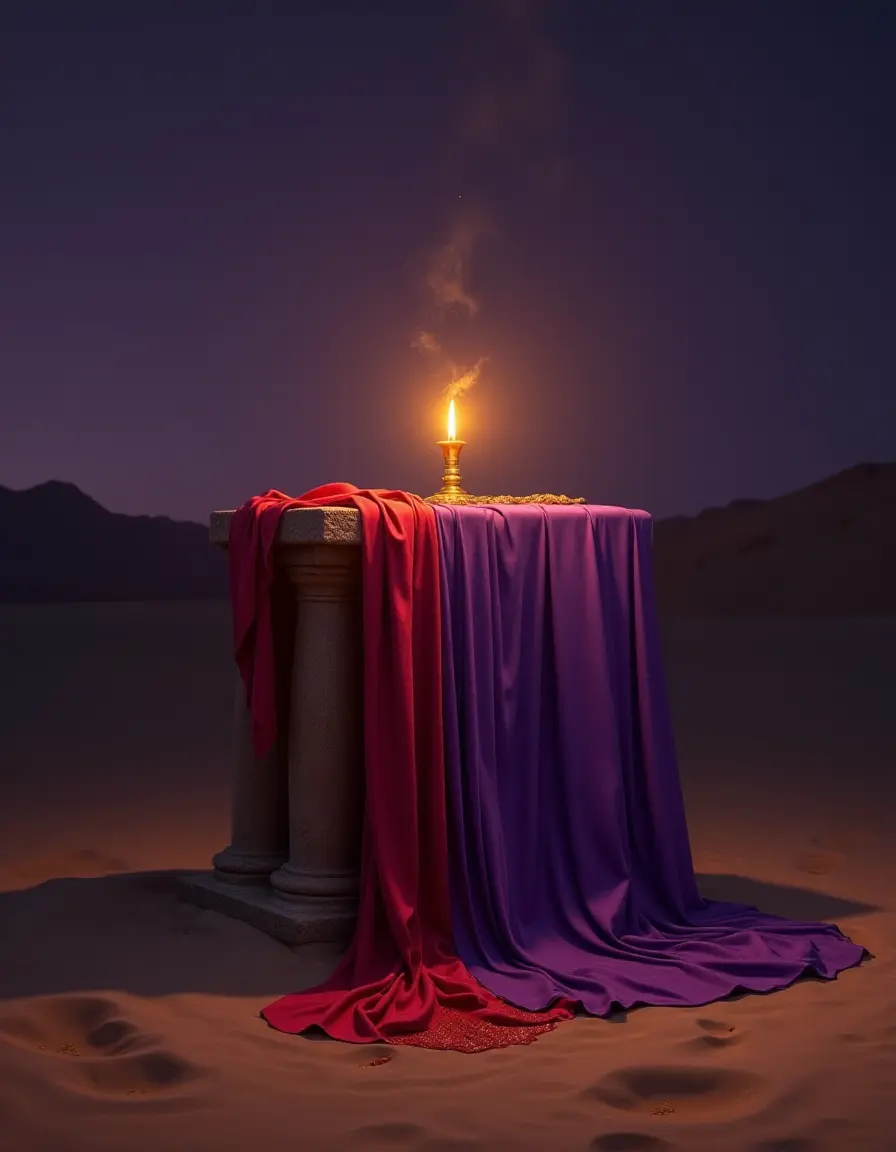
Why did God command Israel to use specific colors in the tabernacle? Why purple robes for mockery when Jesus stood trial? Why scarlet for Rahab's window cord, blue for priestly garments, white for the transfiguration? These aren't aesthetic choices—they're theological declarations.
Throughout Scripture, colors carry profound symbolic meaning, revealing truths about God's nature, humanity's condition, and redemption's cost. When you understand biblical color symbolism, passages explode with new depth. The crimson cord becomes salvation's lifeline. Purple mockery becomes unintended coronation. White garments proclaim victory over sin's stain.
This comprehensive guide explores what major colors mean biblically, their scriptural appearances, and the spiritual truths they communicate. Understanding these colors unlocks layers of meaning woven throughout God's Word.
Why God Uses Colors Symbolically
Colors as Divine Language
God communicates through multiple channels:
- Words (Scripture, prophecy, teaching)
- Actions (miracles, judgments, provisions)
- Nature (creation declares His glory)
- Symbols (numbers, animals, objects, colors)
Colors function as visual theology—truth made visible. When ancient Israelites saw the tabernacle's blue, purple, and scarlet fabrics, they weren't just admiring beauty; they were encountering theological truths about heaven, royalty, and sacrifice.
Exodus 25:3-4 lists tabernacle materials including:
"gold, silver and bronze; blue, purple and scarlet yarn and fine linen"
These colors weren't random. God specifically commanded them because each carried meaning.
The Tabernacle: A Symphony of Symbolic Colors
The tabernacle perfectly demonstrates biblical color symbolism. Every fabric, metal, and dye communicated spiritual reality:
Blue = Heaven, divinity, God's presence
Purple = Royalty, kingship, authority
Scarlet/Red = Blood, sacrifice, atonement
White (fine linen) = Purity, righteousness
Gold = Divine glory, deity, holiness
Silver = Redemption, atonement price
Bronze = Judgment, endurance, strength
Together, these colors told the gospel story before Christ came. The tabernacle was a colorful prophecy—every hue pointing toward Jesus.
Red and Scarlet: Blood, Sacrifice, and Redemption
The Color of Atonement
Red/scarlet is Scripture's most theologically loaded color, consistently representing blood, sacrifice, sin, and redemption.
Old Testament Scarlet
Rahab's Scarlet Cord (Joshua 2:18-21):
"Unless, when we enter the land, you have tied this scarlet cord in the window through which you let us down."
Significance: The scarlet cord saved Rahab's household from Jericho's destruction. This crimson thread prefigures Christ's blood—the only salvation from judgment. Red = protection through sacrifice.
The Scarlet Worm (Psalm 22:6, Isaiah 1:18):
Psalm 22 (Messianic psalm of crucifixion) declares:
"But I am a worm and not a man, scorned by everyone, despised by the people."
The Hebrew word tola means "crimson worm"—an insect that climbs trees, crushes itself, releases crimson dye, then dies protecting its offspring. This is Christ's crucifixion prophetically depicted: climbing the tree (cross), crushing Himself (bearing sin), releasing crimson (blood), dying to save His children.
Isaiah 1:18 uses this imagery:
"Though your sins are like scarlet, they shall be as white as snow; though they are red as crimson, they shall be like wool."
Scarlet = sin's stain. White = redemption's cleansing. The crimson worm's sacrifice transforms scarlet sin into snowy purity.
Tabernacle Scarlet:
Throughout Exodus, scarlet yarn appears in:
- Tabernacle curtains (Exodus 26:1)
- Priestly garments (Exodus 28:5-6)
- Veil separating Holy of Holies (Exodus 26:31)
Every appearance pointed to coming blood sacrifice—the Messiah's atonement that these rituals foreshadowed.
Red Heifer Sacrifice (Numbers 19):
"Speak to the Israelites and get them to bring you a red heifer without defect or blemish and that has never been under a yoke."
The rare red heifer, completely crimson, was sacrificed for purification from death's defilement. This prefigures Christ—the spotless sacrifice whose blood purifies from sin (spiritual death).
New Testament Red: Christ's Blood
Jesus' Blood as Atonement:
Matthew 26:28: "This is my blood of the covenant, which is poured out for many for the forgiveness of sins."
Hebrews 9:22: "Without the shedding of blood there is no forgiveness."
1 Peter 1:18-19: "It was not with perishable things such as silver or gold that you were redeemed... but with the precious blood of Christ, a lamb without blemish or defect."
The red thread runs from Genesis to Revelation:
- Abel's sacrifice (Genesis 4)
- Passover lamb's blood (Exodus 12)
- Day of Atonement (Leviticus 16)
- Rahab's cord (Joshua 2)
- Christ's crucifixion (Matthew 27)
- The Lamb slain (Revelation 5)
Red declares: Redemption costs blood. Sin's payment is death. Christ's crimson sacrifice brings white righteousness.
Purple: Royalty, Wealth, and Kingship
The Color of Kings
Purple was ancient world's most expensive color, extracted from thousands of murex sea snails. Only royalty and extreme wealth afforded purple garments. Consequently, purple symbolized royalty, authority, and kingship.
Purple in the Tabernacle
Exodus 26:1: Tabernacle curtains contained "blue, purple and scarlet."
Purple's position between blue (heaven) and scarlet (sacrifice) is significant—it represents the King who bridges heaven and earth through sacrificial love.
Lydia: The Purple Dealer
Acts 16:14:
"One of those listening was a woman from the city of Thyatira named Lydia, a dealer in purple cloth. She was a worshiper of God."
Lydia's occupation wasn't incidental. Luke mentions she dealt in purple—marking her as wealthy, connected to royalty, dealing in kingship's color. When she encountered the true King (Jesus through Paul's gospel), the purple dealer bowed to Purple Majesty.
Jesus Mocked in Purple
Mark 15:17-20:
"They put a purple robe on him, then twisted together a crown of thorns and set it on him. And they began to call out to him, 'Hail, king of the Jews!'"
John 19:2-3:
"The soldiers twisted together a crown of thorns and put it on his head. They clothed him in a purple robe and went up to him again and again, saying, 'Hail, king of the Jews!'"
Exquisite irony: Roman soldiers mocked Jesus with purple, not realizing they prophetically crowned Him. They intended ridicule; God intended coronation. Purple mockery became royal proclamation—He IS King, though they mocked.
Their sarcasm spoke truth: This bloodied, thorn-crowned man in borrowed purple WAS the King of kings. Purple simultaneously represents His rejection and His rightful reign.
Purple in Revelation
Revelation 17:4: The great prostitute (false religion) wears purple and scarlet—counterfeit royalty, illegitimate authority usurping Christ's true kingship.
Contrast: False religion clothes itself in purple (stolen royalty). Christ earned His purple through crucifixion.
Blue: Heaven, Divinity, and God's Commandments
The Color of Heaven
Blue consistently represents the heavenly realm, God's divine nature, and celestial authority.
Blue in the Tabernacle and Priestly Garments
Exodus 28:31: "Make the robe of the ephod entirely of blue."
The high priest's robe was completely blue—representing his role as mediator between heaven (God) and earth (people). Blue = divine connection.
Numbers 15:38-39:
"Speak to the Israelites and say to them: 'Throughout the generations to come you are to make tassels on the corners of your garments, with a blue cord on each tassel. You will have these tassels to look at and so you will remember all the commands of the LORD.'"
Blue tassels = visual reminders of God's commandments. Every glance at blue fringes prompted remembrance of divine law—heaven's authority governing earthly life.
Blue as God's Throne
Ezekiel 1:26:
"Above the vault over their heads was what looked like a throne of lapis lazuli [deep blue stone], and high above on the throne was a figure like that of a man."
Exodus 24:10:
"They saw the God of Israel. Under his feet was something like a pavement made of lapis lazuli, as bright blue as the sky."
God's throne area = blue—the color of heaven itself. Blue reminds Israel: God reigns from heaven; His authority extends over earth.
Jesus: Heaven Descended
Though Scripture doesn't mention blue clothing on Jesus, His entire ministry embodied blue's meaning—heaven invading earth, divinity dwelling among humanity.
John 3:13: "No one has ever gone into heaven except the one who came from heaven—the Son of Man."
John 6:38: "For I have come down from heaven not to do my will but to do the will of him who sent me."
Jesus IS blue's fulfillment—the divine (blue) becoming flesh, heaven's King (purple) shedding sacrificial blood (scarlet).
White: Purity, Righteousness, and Holiness
The Color of Sinlessness
White represents purity, holiness, righteousness—the absence of sin's stain, the presence of moral perfection.
White Linen in the Tabernacle
Fine white linen clothed priests, covered tabernacle items, and formed curtains.
Exodus 28:39: "Weave the tunic of fine linen."
Leviticus 16:4: On the Day of Atonement, the high priest wore simple white linen—no gold, no colors—representing purity required to enter God's presence.
White linen = righteous deeds of saints (Revelation 19:8). The garment itself symbolizes righteousness—not earned but granted by God.
Christ Transfigured in White
Matthew 17:2:
"There he was transfigured before them. His face shone like the sun, and his clothes became as white as the light."
Mark 9:3: "His clothes became dazzling white, whiter than anyone in the world could bleach them."
Christ's white garments revealed His sinless perfection, His divine glory normally veiled in flesh. White = the purity He possessed inherently, which He grants believers through redemption.
White Garments in Revelation
Revelation 3:4-5:
"They will walk with me, dressed in white, for they are worthy. The one who is victorious will, like them, be dressed in white."
Revelation 7:14:
"They have washed their robes and made them white in the blood of the Lamb."
Profound paradox: Robes made white through blood. Crimson sacrifice produces snowy purity. Scarlet blood creates white righteousness—the gospel in color.
Revelation 19:14: "The armies of heaven were following him, riding on white horses and dressed in fine linen, white and clean."
Believers' white garments aren't self-achieved purity but Christ's righteousness imputed—His whiteness covering their stain.
Gold: Divine Glory, Deity, and Holiness
The Color of God's Presence
Gold symbolizes divine glory, deity, supreme value, and God's holiness. Being precious, incorruptible, and beautiful, gold perfectly represents God's nature.
Gold in the Tabernacle
Gold appeared throughout the tabernacle, especially in the Holy of Holies:
Ark of the Covenant: Covered completely in pure gold (Exodus 25:11)
Mercy Seat: Pure gold (Exodus 25:17)
Lampstand: One talent of pure gold (Exodus 25:31)
Altar of Incense: Overlaid with pure gold (Exodus 30:3)
Cherubim: Hammered gold (Exodus 25:18)
Everything closest to God's manifest presence = gold. The more holy the object, the more gold it contained. Gold = God's glory.
Gold in Solomon's Temple
1 Kings 6:20-22:
"The inner sanctuary was twenty cubits long, twenty wide and twenty high. He overlaid the inside with pure gold... He overlaid the whole interior with gold."
The Holy of Holies—600 talents of gold covering everything. God's dwelling = gold. Divine presence radiates golden glory.
The Wise Men's Gold
Matthew 2:11:
"They saw the child with his mother Mary, and they bowed down and worshiped him. Then they opened their treasures and presented him with gifts of gold, frankincense and myrrh."
Gold = acknowledgment of deity. Bringing gold to baby Jesus proclaimed: This child is God incarnate, worthy of gold's worship.
Gold Tried by Fire
1 Peter 1:7:
"These have come so that the proven genuineness of your faith—of greater worth than gold, which perishes even though refined by fire—may result in praise, glory and honor when Jesus Christ is revealed."
Revelation 3:18: "I counsel you to buy from me gold refined in the fire, so you can become rich."
Refined gold = tested, proven, purified faith—worth more than physical gold. Believers become "golden" through trials purifying their faith.
Black: Judgment, Famine, Sin, and Mourning
The Color of Darkness
Black represents judgment, famine, mourning, death, and spiritual darkness. While not inherently evil (God created darkness, Genesis 1:2-5), black often symbolizes negative realities.
Black in Lamentations
Lamentations 4:8:
"But now they are blacker than soot; they are not recognized in the streets. Their skin has shriveled on their bones."
Black = suffering under judgment, the physical manifestation of God's discipline on rebellious Israel.
The Black Horse of Revelation
Revelation 6:5-6:
"I looked, and there before me was a black horse! Its rider was holding a pair of scales in his hand. Then I heard... 'Two pounds of wheat for a day's wages, and six pounds of barley for a day's wages.'"
The black horse brings famine, economic collapse, and scarcity. Black = judgment's devastating effects.
Black as Mystery: God in Darkness
Not all black is negative. Sometimes black represents divine mystery:
Exodus 20:21: "The people remained at a distance, while Moses approached the thick darkness where God was."
1 Kings 8:12: "The LORD has said that he would dwell in a dark cloud."
Here, "darkness" isn't evil but mystery—God's ways beyond human comprehension. Black = the unknown aspects of God we cannot fully grasp, His transcendent otherness.
Psalm 97:2: "Clouds and thick darkness surround him; righteousness and justice are the foundation of his throne."
Silver: Redemption, Atonement, and the Price of Souls
The Color of Redemption
Silver represents redemption price, atonement, and the value of souls.
The Temple Tax
Exodus 30:11-16 commands every Israelite to pay half a shekel of silver as "atonement money"—ransom for their lives.
Silver = the price of redemption. This wasn't optional charity but required payment acknowledging life's value and need for ransom.
Thirty Pieces of Silver
Matthew 26:14-15:
"Then one of the Twelve—the one called Judas Iscariot—went to the chief priests and asked, 'What are you willing to give me if I deliver him over to you?' So they counted out for him thirty pieces of silver."
Zechariah 11:12-13 prophesied this:
"They paid me thirty pieces of silver. And the LORD said to me, 'Throw it to the potter'—the handsome price at which they valued me!"
Thirty pieces of silver = slave's price (Exodus 21:32). Judas sold Jesus for a slave's redemption price—ultimate irony, since Jesus came to redeem all humanity.
Silver's dual meaning here:
- Negative: Betrayal's price
- Positive: Even in betrayal, redemption's cost was paid
Silver in the Tabernacle
Exodus 26:19: The tabernacle's foundation sockets were silver—100 talents of silver supporting the entire structure.
Silver = redemption as foundation. The tabernacle stood on silver sockets made from atonement money (Exodus 38:25-28). Redemption is the foundation upon which God's dwelling rests.
Green: Life, Growth, and Prosperity
The Color of Flourishing
Green symbolizes life, growth, spiritual prosperity, and vitality.
Psalm 23's Green Pastures
Psalm 23:2: "He makes me lie down in green pastures, he leads me beside quiet waters."
Green pastures = spiritual nourishment, rest, abundant provision. Where God leads, life flourishes.
The Righteous Like a Green Tree
Psalm 92:12-14:
"The righteous will flourish like a palm tree, they will grow like a cedar of Lebanon... They will still bear fruit in old age, they will stay fresh and green."
Green = sustained vitality through righteousness. Those rooted in God remain "green"—alive, fruitful, flourishing even in old age.
Green as False Security
Jeremiah 17:8:
"They will be like a tree planted by the water... Its leaves are always green... It has no worries in a year of drought and never fails to bear fruit."
Contrast:
Jeremiah 11:16: "The LORD called you a thriving olive tree with fruit beautiful in form. But with the roar of a mighty storm he will set it on fire, and its branches will be broken."
Green can represent false security—appearing alive outwardly while spiritually dead. Context determines whether green is blessed prosperity or deceptive appearance.
Applying Biblical Color Symbolism
How to Use This Knowledge
1. Deeper Scripture Reading:
When you encounter colors in Scripture, consider their symbolic meaning. Why did Jesus wear purple? Why white at the transfiguration? What does the scarlet cord teach about salvation?
2. Understanding Prophecy:
Revelation's colors aren't random—white horses, red dragons, pale horse, black horse. Each color communicates truth about the rider/creature's nature and purpose.
3. Worship and Prayer:
Meditating on Christ's blood (red), His righteousness (white), His kingship (purple), His divinity (gold) enriches worship and deepens gratitude.
4. Personal Application:
Ask: Are my garments "white" (righteous living)? Am I "green" (flourishing in God)? Have I been washed in "scarlet" blood, made "white as snow"?
5. Teaching Others:
Color symbolism helps explain Scripture to visual learners. Show children how red = Jesus' blood, white = purity, gold = God's glory.
Caution: Don't Over-Interpret
Not every color reference carries deep meaning. Sometimes blue is just describing the sky. Sometimes red is just describing an object's appearance.
Context determines significance. When colors appear in:
- Theologically rich passages (tabernacle, Christ's clothing, Revelation visions)
- Prophetic imagery
- Covenantal contexts
- Worship settings
...symbolic meaning likely exists. But don't force meaning where none is warranted.
Let Scripture interpret Scripture. If the Bible consistently associates a color with a concept across multiple passages, that pattern matters. If a color appears once with no theological context, don't build doctrine on it.
Conclusion: Colors as Visual Gospel
Biblical colors aren't decorative—they're declarative. Every hue proclaims truth:
Scarlet crimson blood purchased redemption
White snowy robes display gifted righteousness
Royal purple crowns the King who bled
Heavenly blue reminds us God reigns
Divine gold reveals His glorious presence
Redemptive silver declares the price He paid
Living green shows His nourishing grace
Mysterious black conceals His transcendent otherness
Together, these colors paint the gospel:
God (gold) dwelling in mystery (black), bridging heaven (blue) and earth through the King (purple) who shed His blood (scarlet) to give us white robes (white), redeeming us (silver) so we flourish (green) forever.
Next time you read Scripture, see the colors. They're there for a reason. God doesn't waste words—or colors. Every shade, every hue, every tint whispers: "See what I've done. Understand who I am. Marvel at this gospel painted in every color of creation."
The rainbow covenant (Genesis 9:13-16) promised God wouldn't destroy the earth again through flood. Every rainbow since reminds us: God keeps His colorful covenant. He speaks through colors. And the greatest story ever told blazes with crimson sacrifice, white righteousness, and purple majesty—the gospel painted in living color.
Related Articles:
Categories: