
The Number 7 in the Bible: Divine Perfection and Prophetic Patterns
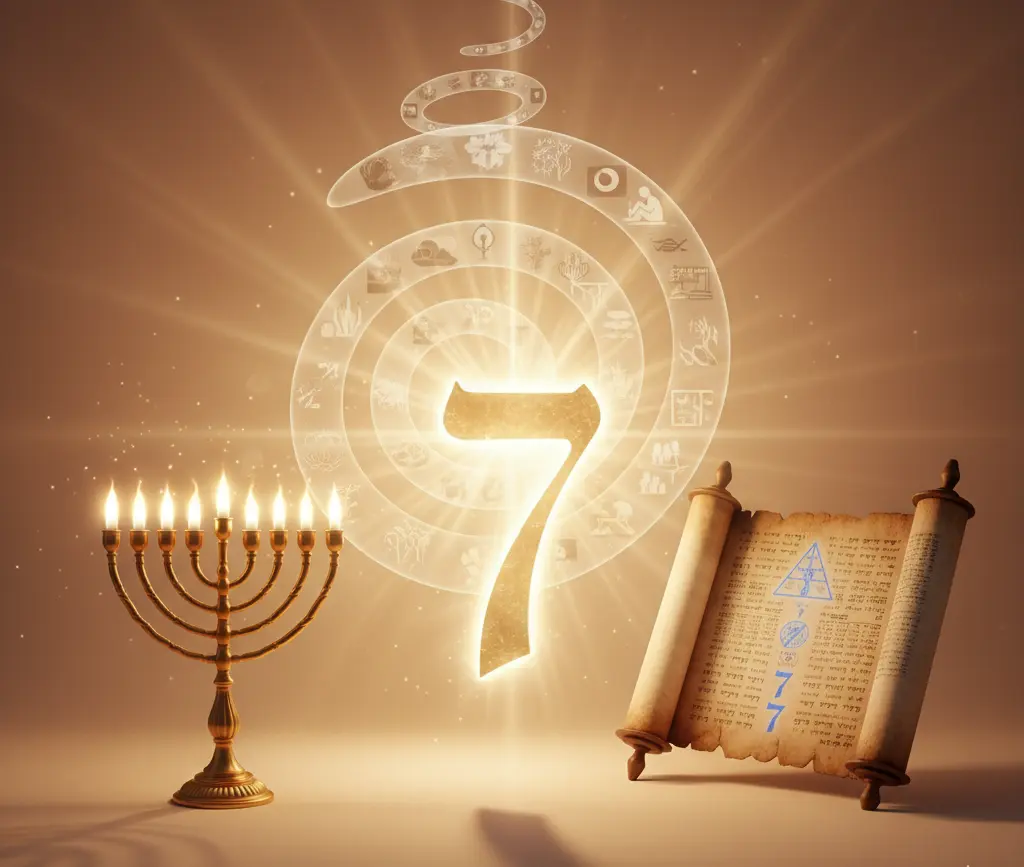
The number 7 thunders through Scripture with a frequency that demands attention—appearing over 700 times across both Testaments. From the seven days of creation to the seven seals of Revelation, this number weaves through biblical narrative like a golden thread, marking moments of divine completion and spiritual perfection.
But is seven merely a recurring motif, or does it carry deeper prophetic significance? As we trace its appearances from Genesis to Revelation, a pattern emerges that reveals God's intentional design and His covenant relationship with humanity.
Key Takeaways
-
The number 7 appears over 700 times in Scripture, making it one of the most significant numbers in the Bible
-
Seven represents divine completion and perfection, rooted in God's creation week
-
Biblical sevens mark covenantal moments, from Noah's covenant to Christ's seven last words
-
Prophetic patterns use seven extensively, especially in Daniel and Revelation
-
Understanding biblical sevens reveals God's sovereign design throughout salvation history
The Foundation: Seven Days of Creation
The biblical significance of seven begins at the very start—the creation week establishes this number as the divine marker of completion.
God's Creative Pattern
Genesis 1 structures creation across seven distinct days:
"Thus the heavens and the earth were finished, and all the host of them. And on the seventh day God finished his work that he had done, and he rested on the seventh day from all his work that he had done. So God blessed the seventh day and made it holy, because on it God rested from all his work that he had done in creation." (Genesis 2:1-3)
This isn't arbitrary scheduling. The Hebrew word for "finished" (kalah) means to bring to completion, to accomplish fully. God didn't rest because He was tired—He rested to establish a pattern of completion and consecration.
The seventh day receives special blessing and sanctification, setting it apart from the other six. This establishes seven as the number that moves creation from work to rest, from incompletion to divine perfection.
The Sabbath Principle
The Sabbath day—every seventh day—becomes Israel's weekly reminder of God's creative authority:
"Remember the Sabbath day, to keep it holy. Six days you shall labor, and do all your work, but the seventh day is a Sabbath to the LORD your God." (Exodus 20:8-10)
The Sabbath doesn't just commemorate creation—it participates in it. By resting on the seventh day, Israel reenacts God's creative pattern, acknowledging that He alone brings true completion.
This principle extends beyond daily rest into larger cycles: every seventh year was a Sabbath year for the land (Leviticus 25:4), and after seven cycles of seven years came the Year of Jubilee (Leviticus 25:8-10). The pattern of seven structures time itself according to divine rhythm.
Seven in Covenant Relationships
Throughout Scripture, the number seven marks moments when God establishes or confirms His covenant with humanity.
Noah's Covenant
When God determined to spare Noah and restart humanity, seven appears repeatedly:
-
Seven days warning before the flood (Genesis 7:4)
-
Seven pairs of clean animals (Genesis 7:2)
-
Seven days after the first dove's return before sending it again (Genesis 8:10)
After the flood, Noah builds an altar and offers sacrifices. God then establishes His covenant—marked by the rainbow—promising never again to destroy the earth by flood (Genesis 9:11-17).
The repeated sevens underscore that this isn't just a rescue operation—it's a complete reset of creation, a new beginning under divine covenant.
Abraham's Covenant at Beersheba
When Abraham makes a covenant with Abimelech, he sets aside seven ewe lambs as a witness:
"Abraham set seven ewe lambs of the flock apart. And Abimelech said to Abraham, 'What is the meaning of these seven ewe lambs that you have set apart?' He said, 'These seven ewe lambs you will take from my hand, that this may be a witness for me that I dug this well.' Therefore that place was called Beersheba, because there both of them swore an oath." (Genesis 21:28-31)
The name "Beersheba" literally means "well of seven" or "well of oath." The seven lambs become the physical seal of a covenant promise, binding both parties in a complete agreement.
The Seven-Fold Sprinkling of Blood
In Leviticus, the high priest sprinkles blood seven times before the Lord during the Day of Atonement (Leviticus 16:14-19). This sevenfold application of blood represents complete atonement—full covering for sin.
The number seven here isn't excessive ritual; it's theological precision. Complete sin requires complete covering. Perfect holiness demands perfect purification.
Seven in Israel's Sacred Calendar
Israel's religious calendar revolves around the number seven, structuring worship and celebration according to divine pattern.
The Seven Feasts of Israel
Leviticus 23 establishes seven appointed feasts that mark Israel's sacred year:
- Passover - Deliverance from Egypt
- Unleavened Bread - Separation from sin
- First Fruits - Consecration of the harvest
- Pentecost - Giving of the Law
- Trumpets - Call to repentance
- Day of Atonement - National cleansing
- Tabernacles - God dwelling with His people
These seven feasts don't just commemorate past events—they prophetically point forward to God's complete plan of redemption. Many scholars see Christ's first coming fulfilling the first four feasts, with the final three awaiting His return.
The Sabbath Year and Jubilee
Every seventh year, the land was to rest—no planting, no harvesting, complete trust in God's provision (Leviticus 25:1-7). This "Sabbath rest" for the land mirrored the weekly Sabbath for people.
After seven cycles of seven years (49 years), the fiftieth year was proclaimed as Jubilee:
"You shall count seven weeks of years, seven times seven years, so that the time of the seven weeks of years shall give you forty-nine years. Then you shall sound the loud trumpet on the tenth day of the seventh month. On the Day of Atonement you shall sound the trumpet throughout all your land." (Leviticus 25:8-9)
The Jubilee brought complete release—debts forgiven, slaves freed, land returned. It was a year of total restoration, the ultimate expression of seven's completion principle.
The Menorah's Seven Lamps
The golden lampstand in the Tabernacle held seven lamps, providing continuous light before the Lord (Exodus 25:31-37). These seven lights represent:
-
Complete illumination - God's presence filling the sacred space
-
The seven-fold Spirit of God - Later referenced in Revelation
-
Israel's witness to the nations - Light shining in darkness
The menorah's design, with its central stem and six branches, creates a unified whole—seven becoming one, diversity unified in divine purpose.
Seven in Prophetic Literature
The prophetic books employ seven extensively, particularly in visions of end-times events and divine judgment.
Daniel's Seventy Weeks
Perhaps the most famous prophetic seven appears in Daniel 9:
"Seventy weeks are decreed about your people and your holy city, to finish the transgression, to put an end to sin, and to atone for iniquity, to bring in everlasting righteousness, to seal both vision and prophet, and to anoint a most holy place." (Daniel 9:24)
These "seventy weeks" are actually seventy "sevens" of years—490 years total. Daniel's vision divides history into precise segments of seven, leading to the Messiah's coming and ultimate fulfillment of God's redemptive plan.
The prophecy demonstrates that God doesn't just use seven symbolically—He structures salvation history itself in sevens, moving creation toward its appointed completion.
Zechariah's Seven Eyes
Zechariah sees a vision of a lampstand with seven lamps, which represent "the seven eyes of the LORD, which range through the whole earth" (Zechariah 4:10). This imagery connects the seven lamps to God's complete knowledge and sovereign oversight.
Nothing escapes these seven eyes—divine omniscience is perfect and comprehensive, seeing all things at all times.
Seven in the Gospels: Christ's Ministry
The number seven appears strategically in the Gospels, marking key moments in Christ's ministry and teaching.
The Seven "I Am" Statements in John
Jesus makes seven profound declarations about His identity in John's Gospel:
- "I am the bread of life" (John 6:35)
- "I am the light of the world" (John 8:12)
- "I am the door" (John 10:9)
- "I am the good shepherd" (John 10:11)
- "I am the resurrection and the life" (John 11:25)
- "I am the way, the truth, and the life" (John 14:6)
- "I am the true vine" (John 15:1)
These seven declarations present Christ's complete sufficiency—He is everything humanity needs for salvation and spiritual life. The sevenfold claim echoes God's self-revelation to Moses at the burning bush ("I AM WHO I AM," Exodus 3:14).
Seven Miracles in John's Gospel
John carefully selects seven miraculous signs to demonstrate Christ's divine authority:
- Turning water to wine (John 2:1-11)
- Healing the official's son (John 4:46-54)
- Healing the paralytic (John 5:1-15)
- Feeding the 5,000 (John 6:1-14)
- Walking on water (John 6:16-21)
- Healing the blind man (John 9:1-41)
- Raising Lazarus (John 11:1-44)
These aren't random selections—John intentionally chooses seven to present Christ's complete power over nature, disease, and death itself.
The Seven Last Words from the Cross
Christian tradition identifies seven statements Jesus made during crucifixion:
- "Father, forgive them, for they know not what they do" (Luke 23:34)
- "Today you will be with me in paradise" (Luke 23:43)
- "Woman, behold your son... behold your mother" (John 19:26-27)
- "My God, my God, why have you forsaken me?" (Matthew 27:46)
- "I thirst" (John 19:28)
- "It is finished" (John 19:30)
- "Father, into your hands I commit my spirit" (Luke 23:46)
These seven statements encompass the complete work of redemption—forgiveness offered, paradise promised, relationships restored, judgment borne, humanity embraced, mission accomplished, and spirit surrendered.
Seven in Revelation: The Consummation
The Book of Revelation uses seven more extensively than any other biblical book, structuring its apocalyptic vision in layers of sevens.
The Seven Churches
Christ addresses seven specific churches in Asia Minor (Revelation 2-3):
- Ephesus - Lost their first love
- Smyrna - Facing persecution
- Pergamum - Compromising with false teaching
- Thyatira - Tolerating Jezebel's influence
- Sardis - Dead orthodoxy
- Philadelphia - Faithful endurance
- Laodicea - Lukewarm complacency
These seven churches weren't randomly chosen—they represent the complete spectrum of church conditions throughout history. Every congregation faces variations of these same challenges.
The Seven Seals, Trumpets, and Bowls
Revelation's judgment sequences unfold in three sets of seven:
Seven Seals (Revelation 6-8) - Progressive revelation of God's judgment
Seven Trumpets (Revelation 8-11) - Warnings and partial judgments
Seven Bowls (Revelation 16) - Final, complete outpouring of wrath
Each series intensifies, moving from preliminary warnings toward ultimate consummation. The threefold structure of seven emphasizes the complete, exhaustive nature of divine judgment—nothing left undone, no corner of creation untouched.
The Seven Spirits of God
Revelation repeatedly mentions "the seven spirits of God" (Revelation 1:4, 3:1, 4:5, 5:6). This phrase likely refers to the Holy Spirit in His complete fullness, drawing from Isaiah's description:
"And the Spirit of the LORD shall rest upon him, the Spirit of wisdom and understanding, the Spirit of counsel and might, the Spirit of knowledge and the fear of the LORD." (Isaiah 11:2)
The "seven spirits" aren't seven different entities—they represent the Spirit's perfect, complete operation. Seven captures the fullness of divine presence and power.
Seven Beatitudes in Revelation
Scattered throughout Revelation are seven blessings pronounced on God's people:
- "Blessed is the one who reads aloud the words of this prophecy" (1:3)
- "Blessed are the dead who die in the Lord from now on" (14:13)
- "Blessed is the one who stays awake, keeping his garments on" (16:15)
- "Blessed are those who are invited to the marriage supper of the Lamb" (19:9)
- "Blessed and holy is the one who shares in the first resurrection" (20:6)
- "Blessed is the one who keeps the words of the prophecy of this book" (22:7)
- "Blessed are those who wash their robes" (22:14)
These seven blessings frame Revelation's message—complete blessing awaits those who persevere in faith through tribulation to glory.
The Spiritual Meaning of Seven
Beyond its frequent appearance, what does seven actually signify spiritually?
Divine Completion and Perfection
Seven consistently marks something brought to its intended fullness. Creation reaches completion on day seven. Judgment cycles complete in seven. Christ's redemptive work encompasses seven last words.
This doesn't mean "perfection" in the sense of flawless execution—it means completeness according to divine purpose. Nothing lacking, nothing excessive, everything as it should be.
God's Covenant Faithfulness
The recurring sevens in covenant contexts underscore God's complete commitment to His promises. Seven lambs at Beersheba. Seven-fold blood sprinkling. Seven feasts marking redemptive history.
Each seven declares: "God's promises are comprehensive, His faithfulness is complete, His covenant is unbreakable."
The Fullness of Time
Seven structures time itself according to divine rhythm—seven days, seven years, seven times seven to Jubilee. This temporal pattern teaches that history isn't random or purposeless; it unfolds according to God's sovereign schedule.
When Paul writes that Christ came "in the fullness of time" (Galatians 4:4), he's describing the completion of God's predetermined sevens—the moment when prophecy, preparation, and promise converged perfectly.
Common Questions About Biblical Sevens
Why is 7 God's number?
Seven became associated with God through the creation week—His first major action established seven as the marker of divine completion. It's not that God "needs" a number, but He chose seven as the pattern by which He structures creation and revelation.
Is seven lucky?
Biblical seven isn't about luck—it's about divine design. Where pagan cultures might view seven as a lucky charm, Scripture presents it as a theological principle: God brings things to completion, and He does so perfectly.
What does "sevenfold" mean in Scripture?
"Sevenfold" typically intensifies the concept of completion—absolute, total, exhaustive. When Cain's vengeance is "sevenfold" (Genesis 4:15), it means complete protection. When we're to forgive "seventy times seven" (Matthew 18:22), it means unlimited forgiveness.
Are all biblical sevens symbolic?
Not necessarily. Sometimes seven is simply the actual number (seven days, seven years). But even literal sevens often carry theological weight—the literal seven days of creation establish a pattern with ongoing symbolic significance.
Does seven appear in other ancient cultures?
Yes—seven appears in Babylonian, Egyptian, and other ancient Near Eastern contexts. However, biblical usage transforms and redefines seven within the context of monotheistic covenant theology, giving it specifically Israelite theological meaning.
Seven in Personal Spiritual Life
Understanding biblical sevens isn't merely academic—it shapes how we approach God and interpret our spiritual journey.
Rest and Completion
The Sabbath principle—rooted in creation's seventh day—teaches us that striving has its limits. God builds rest into the rhythm of faithful living. Our productivity doesn't define our worth; God's completed work does.
Trust in God's Timing
The prophetic sevens of Daniel and Revelation remind us that God's timing is precise, even when we can't see the full pattern. History unfolds according to His sevens, not our preferred schedule.
Comprehensive Redemption
The sevenfold structures of judgment and blessing in Revelation assure us that God's redemptive work is thorough. He doesn't partially save, partially judge, or partially restore—His work is complete.
When we feel our faith is incomplete or our sanctification inadequate, the biblical sevens point us to Christ, whose work is finished (John 19:30)—perfect, complete, lacking nothing.
Conclusion: The Pattern of Divine Perfection
From Genesis to Revelation, seven threads through Scripture as God's signature of completion. It marks creation's rest, covenant's establishment, Israel's sacred calendar, prophecy's structure, Christ's redemptive work, and the church's final blessing.
This isn't numerology or mysticism—it's divine pattern-making. God reveals His character through numbers, and seven declares: "I finish what I start. I keep My promises completely. My purposes reach their appointed fulfillment."
When we encounter seven in Scripture, we're meant to pause and recognize: something significant is being completed here. God is marking this moment as part of His perfect, comprehensive plan.
The sevens don't merely count—they testify. They witness to a God who creates with purpose, covenants with faithfulness, redeems with power, and consummates with glory. Every seven echoes creation's seventh day: "It is finished. It is very good. And God rested."
Related Articles:
Categories: