
Who Were the Emim? The 'Terrible' Giants of Ancient Moab
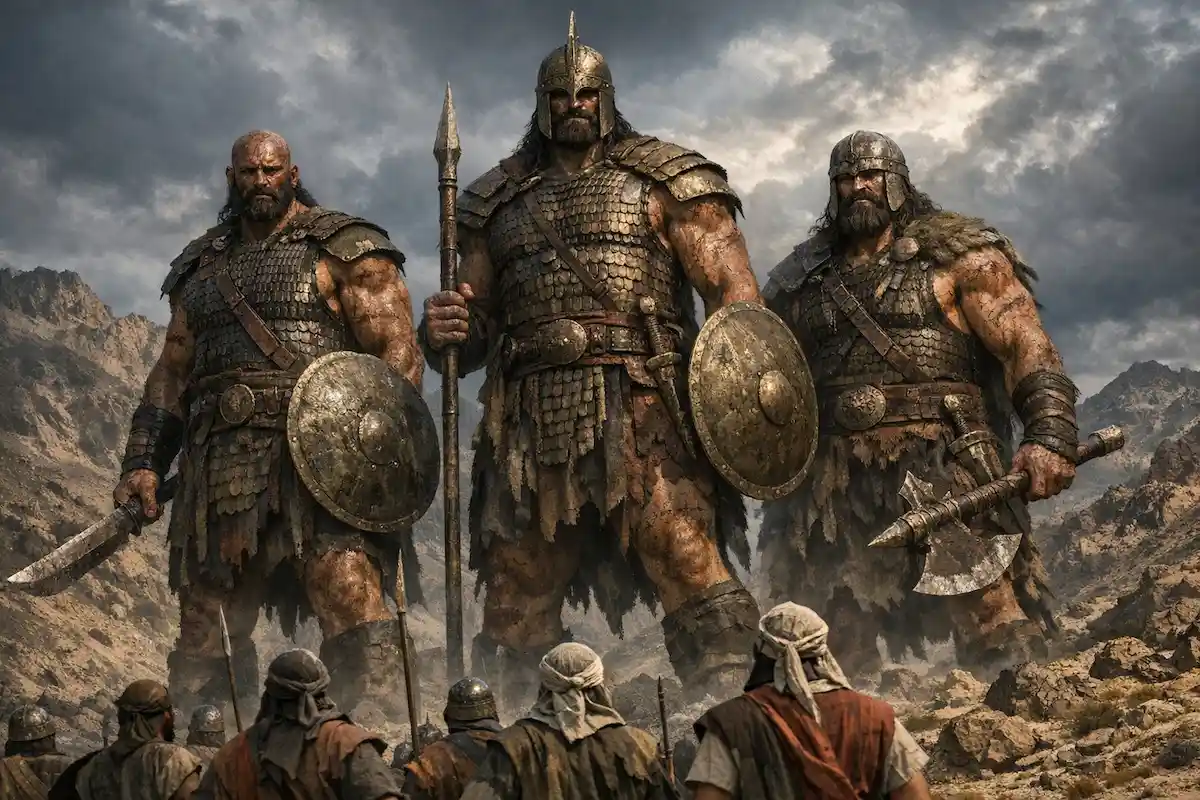
Introduction: Warriors So Fearsome They Were Named "Terror"
Imagine warriors so fearsome that an entire nation named them "The Terror." Not "the mighty ones." Not "the great warriors." Just... terror incarnate.
These were the Emim—and they ruled the plains of Moab until God Himself removed them.
In the ancient world, names carried weight. You didn't casually call a people "The Terrible Ones" unless terror was what they did—what they were. The Moabites, descendants of Lot, lived in the shadow of these giants and gave them a name that still echoes through Scripture: אֵימִים (Emim)—"The Dreadful Ones," "The Fearsome," "The Terror-Warriors."
Scripture preserves only a handful of verses about them. Yet those verses—tucked into Moses' retrospective in Deuteronomy—reveal something profound: the Emim were real, they were terrifying, and God destroyed them without the Moabites lifting a sword.
Who were these giants? Why does the Bible take care to name them and record their fate? And what do they teach us about God's sovereignty over the "giants" that stand against His purposes?
The Emim appear alongside the Anakim in Canaan, the Zamzummim in Ammon, and King Og of Bashan—part of the broader Rephaim lineage that Scripture consistently treats as both historically real and under divine judgment. They represent one branch of the post-Flood giant tribes that God systematically removed from the land, clearing the way for His covenant people and their relatives.
Understanding the Emim requires us to take Scripture seriously: they were not mythological creatures or exaggerated folklore, but actual warriors of extraordinary stature whose very existence pointed to something unnatural continuing in the post-Flood world. Their story connects to the legacy of the Nephilim, the rebellion of the Watchers at Mount Hermon, and the ongoing spiritual warfare between the seed of the woman and the corrupted bloodlines that God judges throughout Scripture.
This article examines the Emim through careful biblical exposition. We will establish the scriptural foundation in Deuteronomy and Genesis, explore why their name means "terror," describe their physical reality within a biblically faithful scale, trace their place in the Rephaim lineage, consider the mystery of post-Flood giants, examine God's judgment upon them, and draw honest spiritual lessons for confronting the overwhelming obstacles we face today.
Biblical Foundation: Deuteronomy 2:10–11 and Related Texts
The primary biblical witness to the Emim is Moses' retrospective in Deuteronomy, as he recounts Israel's journey and the Lord's instructions regarding the lands east of the Jordan.
Deuteronomy 2:10–11: Full Analysis
"The Emites used to live there—a people strong and numerous, and as tall as the Anakites. Like the Anakites, they too were considered Rephaites, but the Moabites called them Emites." (Deuteronomy 2:10–11, NIV)
This verse is part of Moses' description of the territory that would become Moab. The narrative context is Israel's approach to the Promised Land from the east. God has forbidden Israel to attack certain nations and territories; instead, He explains who formerly lived there and how the current inhabitants received the land.
"The Emites used to live there" — The Hebrew הָאֵמִים (ha-Emim) is the definite form: "the Emim." The past tense ("used to live") indicates they were no longer the dominant population by the time of Moses' speech. They had been displaced or destroyed, and their territory had been given to the Moabites.
"A people strong and numerous, and as tall as the Anakites" — Three traits are highlighted: strength (ḥăzāqîm), numerical abundance (rabîm), and height. The comparison to the Anakites (Anakim) is deliberate. The Anakim are elsewhere explicitly linked to the Nephilim (Numbers 13:33) and were the giants who made Israel's spies feel "like grasshoppers." To say the Emim were "as tall as the Anakites" places them on the same biblical giant scale—extraordinary in size and martial prowess, but not mythological or fantastical.
"Like the Anakites, they too were considered Rephaites" — The text classifies the Emim as Rephaim (רְפָאִים). In the Bible, "Rephaim" can denote (1) a specific giant tribe or (2) the broader category of giant clans (often "Rephaites"). Here, the Emim are "Rephaites" in the same sense as the Anakim: they belong to the same family of post-Flood giant peoples that Scripture associates with the legacy of the Nephilim and that God removes to make way for His covenant people.
"But the Moabites called them Emites" — The Moabites did not invent the name "Emim"; rather, the biblical author explains that what the Moabites called this people was "Emites" (Emim). So the name by which we know them is the one used by the inhabitants of Moab—the people who lived in fear of them and eventually received their land from God.
Genesis 14:5: The Emim in Early History
The Emim appear once in Genesis, in the account of the eastern kings who made war in the days of Abraham:
"In the fourteenth year Kedorlaomer and the kings allied with him went out and defeated the Rephaites in Ashteroth Karnaim, the Zuzites in Ham, the Emites in Shaveh Kiriathaim." (Genesis 14:5, NIV)
"The Emites in Shaveh Kiriathaim" — Here the Emim are located at Shaveh Kiriathaim, a place in the Transjordan, often identified with the plains of Moab or the region that would later bear that name. They are listed alongside other Rephaim-related groups (Rephaites at Ashteroth Karnaim, Zuzites—likely the Zamzummim—in Ham). This confirms that the Emim were an established, named people in the patriarchal period, associated with the same geographical and ethnic complex as the other giant tribes.
Implications — Genesis 14 shows that the Emim were not a late invention of tradition; they were a real people in a real place, known to the biblical narrative from early times. Their presence in the Transjordan and their classification with the Rephaim fit the picture given in Deuteronomy: a strong, numerous, tall people whom the Moabites called "the Terrible Ones" and whose land God eventually gave to the descendants of Lot. The fact that both Genesis and Deuteronomy name them—and that Deuteronomy takes care to explain their fate—underscores their importance in the biblical account of the giant tribes and of God's sovereign allocation of the land.
Connection to the Anakim
Deuteronomy 2:10–11 explicitly links the Emim to the Anakim in two ways: (1) they were "as tall as the Anakites," and (2) they were "like the Anakites" in being "considered Rephaites." The Anakim are the giants of the hill country of Canaan—Hebron, Debir, Anab—who terrified the spies and were later driven out by Caleb and Joshua. The comparison indicates a shared stature and a shared place in the Rephaim lineage. The Emim were the eastern counterpart to the Anakim: giants in Moab as the Anakim were giants in Canaan.
Part of the Rephaim Lineage
The Rephaim appear throughout the Old Testament as a broad category of giant peoples: in Canaan (e.g., Genesis 15:20; 2 Samuel 21), in Ammon (Zamzummim, Deuteronomy 2:20–21), in Moab (Emim), and in Bashan (Og, Deuteronomy 3:11). The Emim are thus one branch of the Rephaim—the branch that once held the territory of Moab before God gave it to the Moabites. This lineage is important for understanding both the continuity of giant tribes after the Flood and the pattern of divine judgment that removes them to make room for God's purposes.
Name Meaning: "The Terrible Ones"
The name Emim (אֵימִים) is not a neutral geographical or tribal label; it is a name that reflects the fear they inspired.
Hebrew אֵימִים and Root אֵימָה
The Hebrew אֵימִים (Emim) is the plural form related to the root אֵימָה (êmâ), which means "terror," "dread," or "fear." Lexicons and commentators consistently render the name as "the Terrible Ones," "the Frightful Ones," or "the Dreaded Ones." The same root appears in passages such as Deuteronomy 1:29 ("Do not be terrified") and Isaiah 21:4 ("Fear and trembling"), where it denotes the kind of fear that causes people to shrink back.
By naming this people "the Emim," the Moabites (and the biblical text) are describing the effect they had on others: they were the terrifying ones—so formidable that their very identity was wrapped up in the dread they produced.
💡 DID YOU KNOW?
The Hebrew word for "terror" (אֵימָה) that gives us "Emim" appears 17 times in the Old Testament—and 10 of those times, it describes the fear God Himself puts into Israel's enemies (Exodus 15:16, 23:27; Deuteronomy 32:25). The Emim were "The Terrible Ones"—but they met Someone more terrible: the God who fights for His people. When God wanted to describe His own fearsome power, He used the same word the Moabites used for the giants they couldn't defeat. That's not coincidence. That's irony with theological weight.
Why the Moabites Called Them This
Deuteronomy does not say that the Emim called themselves "Emim"; it says the Moabites called them Emites. That suggests the name arose from the experience of the peoples who lived near them or who eventually displaced them—the ancestors of the Moabites, the descendants of Lot (Genesis 19:36–37). To those who faced them in battle or lived in their shadow, they were simply "the Terrible Ones." The name is therefore a window into the psychological and military reality of the Emim: they were not merely tall, but fearsome—strong, numerous, and dominant until God removed them.
Cultural and Spiritual Significance
The significance of the name extends beyond linguistics. In the biblical worldview, names often reveal character, destiny, or divine judgment. The Emim are not remembered as "the noble ones" or "the great ones" but as "the Terrible Ones"—a reminder that the giant clans of the Rephaim were not romantic heroes but powers that inspired dread and that God ultimately brought under judgment. The name thus supports a sober, reverent reading of Scripture: these were real enemies in real territory, and their terror was real until the Lord gave their land to another people.
Physical Description: "As Great and Numerous and Tall as the Anakim"
The Bible does not give the Emim a specific height in cubits. It describes them by comparison: they were "strong and numerous, and as tall as the Anakites."
Biblical Giant Scale: 10–12 Feet, Not Fantasy Proportions
Scripture elsewhere gives concrete measurements for giants. Og king of Bashan had a bed of nine cubits (about 13–14 feet) in length (Deuteronomy 3:11), indicating a man who might have stood roughly in the 9–10+ foot range. Goliath was "six cubits and a span" in the Masoretic text (about 9 feet 9 inches) or "four cubits and a span" in the Septuagint and Dead Sea Scrolls (about 6 feet 9 inches)—in either case, exceptionally tall but within a humanoid scale.
The Bible consistently portrays giants as larger than life—intimidating, powerful, requiring divine help or exceptional faith to overcome—but not as hundred-foot titans of myth. A biblically faithful estimate for the Emim, aligned with the Anakim and other Rephaim, is therefore in the range of roughly 10–12 feet in height: enough to dominate ordinary soldiers and justify the name "the Terrible Ones," without slipping into fantasy.
This matters because sensationalism undermines credibility. The Emim were real warriors in real history. Ten to twelve feet tall is genuinely terrifying—imagine facing a warrior twice your height, with proportional strength and reach. That's not diminishing their fearsome nature; that's taking Scripture seriously.
What Made Them "Terrible"
Their "terror" came from the combination of (1) size—as tall as the Anakim; (2) strength—"a people strong"; and (3) numbers—"numerous." They were not a handful of oddities but a population of giants, controlling territory and capable of projecting power. That combination—great size, strength, and numerical force—is what made them "Emim" in the eyes of the Moabites: the Terrible Ones.
The terror wasn't just physical. There's something psychologically devastating about facing an enemy that towers over you. Ancient warfare was personal—sword to sword, spear to spear. When your opponent's chest is level with your head, when his reach exceeds yours by three feet, when he can drive a spear down through your shield with the weight of a man half again your size behind it—that's when the name "Emim" makes sense. That's terror on the battlefield.
Comparison to Other Giant Tribes
The same passage that describes the Emim (Deuteronomy 2) also describes the Zamzummim in Ammon (2:20–21) in similar terms: "a people great and numerous and tall as the Anakim." The pattern is consistent: the Rephaim tribes (Emim, Anakim, Zamzummim, and the Rephaim of Bashan under Og) are repeatedly compared to one another in greatness, number, and height. The Emim fit that pattern—one of several post-Flood giant peoples that Scripture treats as historically real and under divine judgment.
Unlike the Anakim, who would be driven out by Israel in Canaan, the Emim were removed before Israel's arrival, and their land was given to the Moabites. That distinction highlights God's timing: He clears different territories at different times, according to His plan for each people.
Geography and Territory: The Land of Moab
The Emim were not Canaanites; they were Transjordanian. Their homeland was the territory that would become Moab—east of the Dead Sea, in what is today western Jordan.
Land of Moab (Modern Jordan)
Moab was the region settled by the descendants of Lot through his elder daughter (Genesis 19:36–37). It lay on the eastern side of the Dead Sea and the lower Jordan Valley, bordered by the territory of the Amorites to the north and Edom to the south. The Emim "used to live there"—that is, they occupied this region before the Moabites. God gave their land to the descendants of Lot, just as He would give Canaan to the descendants of Jacob.
Shaveh Kiriathaim
Genesis 14:5 places the Emim at Shaveh Kiriathaim (שָׁוֵה קִרְיָתַיִם), often translated "the plain of Kiriathaim." This was likely a district or city in the same general region—the Transjordanian plains associated with Moab. The mention in Genesis 14 shows that the Emim were not confined to a single village but were a people with a named territory, significant enough to be listed among the peoples defeated by the eastern kings in Abraham's day.
🗺️ THE TERROR TRIANGLE
Here's what most readers miss: three giant tribes formed a coordinated barrier around the Promised Land.
- Anakim in Canaan (west) — blocking entry from the Mediterranean side
- Emim in Moab (east) — controlling the Transjordan approach
- Zamzummim in Ammon (northeast) — securing the northern flank
All three were Rephaim. All three were "as tall as the Anakim." All three had to be removed before Abraham's descendants could inherit.
Coincidence? Or coordinated opposition to God's covenant plan?
The Bible doesn't explicitly say these tribes worked together, but their strategic positioning—forming a defensive perimeter around the very land God promised to Abraham—is striking. It's as if the post-Flood giants instinctively positioned themselves to block the fulfillment of Genesis 15:18-21. They failed. God systematically removed them: Emim and Zamzummim first (given to Lot's descendants), then the Anakim (driven out by Israel). The Terror Triangle was broken by divine intervention, not human military genius.
How Israel Encountered Them
Israel did not conquer the Emim. By the time Israel approached the Promised Land, the Emim had already been dispossessed; their territory was Moabite. Deuteronomy 2:9 says the Lord had given Ar (the region of Moab) to the descendants of Lot, and 2:10–11 explains that this was the land where the Emim had formerly lived.
So Israel "encountered" the Emim only in the sense of hearing about them from Moses—as part of the explanation of why they must not fight Moab and why certain lands were already allocated. The lesson was theological and historical: God had already judged the Emim and given their land to the Moabites; Israel's task was to receive their own inheritance in Canaan and not covet or attack Moab.
Connection to Lot's Descendants
The transfer of the Emim's territory to the Moabites is part of the larger theme of God's sovereignty over the nations. Lot's descendants did not defeat the Emim by their own power; the Lord "destroyed [them] from before [the Ammonites and Moabites]" (Deuteronomy 2:21–22). So the Emim narrative reinforces that it is God who removes giant peoples and assigns land—a pattern that would continue when Israel, by God's command and power, drove out the Anakim and other giants from Canaan.
Nephilim Connection: Rephaim, Post-Flood Giants, and Lineage
The Emim are counted among the Rephaim and compared to the Anakim, who are explicitly linked to the Nephilim in Numbers 13:33. How do the Emim fit into the biblical picture of the Nephilim and post-Flood giants?
Counted Among the Rephaim
We have already seen that Deuteronomy 2:10–11 classifies the Emim as Rephaites, "like the Anakites." The Rephaim, in the broad sense, are the giant clans that appear in the Old Testament after the Flood: in Canaan (Anakim, etc.), in Ammon (Zamzummim), in Moab (Emim), and in Bashan (Og). So the Emim are part of the same family of peoples that Scripture treats as giants and associates with the legacy of the pre-Flood rebellion.
Post-Flood Giant Lineage, Not Pre-Flood Nephilim
The Emim themselves are not the pre-Flood Nephilim. The Nephilim of Genesis 6:1–4 were the offspring of the "sons of God" and the "daughters of men" and were destroyed in the Flood (except for the spiritual legacy that some traditions associate with demons). The Emim are a post-Flood people: they appear in Genesis 14 and Deuteronomy 2 in the context of the patriarchal and exodus eras.
So they are best understood as a descendant or related giant lineage—part of the Rephaim complex that continued or reemerged after the Flood, whether through genetic transmission, a second incursion, or another mechanism that Scripture does not fully spell out. The key point is that they belong to the same spiritual and historical "giant" category as the Anakim and Zamzummim: peoples that God removes as He advances His covenant plan.
Why Giants Keep Appearing After the Flood: A Theological Mystery
Here's what troubles thoughtful readers: the Watchers are bound (2 Peter 2:4). The Nephilim died in the Flood. Yet giants—Emim, Anakim, Zamzummim—appear throughout the post-Flood world. How?
Scripture doesn't spell this out explicitly, which means we must be careful not to go beyond what is written. But three possibilities emerge from biblical and extra-biblical texts:
1. Genetic Corruption Survived Somehow
Perhaps the genetic corruption introduced by the Watchers persisted through recessive genes or through Ham's line (as some ancient Jewish sources hint, though Scripture doesn't confirm this). This would explain why giants appear in scattered locations post-Flood without requiring a second angelic incursion.
2. A Second Incursion Occurred
Genesis 6:4 includes a tantalizing phrase: "The Nephilim were on the earth in those days—and also afterward." That "afterward" could mean after the sons of God came to the daughters of men, or it could hint at something that happened post-Flood. If other fallen angels (not the bound Watchers) transgressed in a similar way later, it could account for post-Flood giants. Scripture doesn't develop this, but it leaves the door open.
3. Demonic Influence or Manifestation
The Nephilim Spirit Theory suggests that the disembodied spirits of the pre-Flood Nephilim—what we call demons—found ways to manifest or influence post-Flood genetics and bloodlines. The Book of Enoch (accepted as authoritative by early Christians) states that the spirits of the dead Nephilim would become "evil spirits" that plague the earth. If demons retain some connection to their former hybrid nature, they might have influenced the emergence of post-Flood giant clans.
We don't know which explanation is correct. What we do know is this: the Emim were real, they were Rephaim, and they fit a pattern God consistently judges. They weren't just tall men. They were part of something unnatural—a lineage or phenomenon that Scripture treats as incompatible with God's purposes and worthy of removal.
The Dual Meaning of "Rephaim"
Here's something most readers miss: Rephaim (רְפָאִים) has a dual meaning in Hebrew. It means both:
- Giants (as in Deuteronomy 2:10-11, 3:11)
- Spirits of the dead (as in Isaiah 14:9, 26:14; Psalm 88:10)
The same word. Both meanings. That's not coincidence.
The ancient Israelites understood something we often miss: the giant tribes weren't just physically imposing—there was something spiritually corrupt about them. When Isaiah describes the realm of the dead, he uses "Rephaim." When Moses describes giant warriors, he uses "Rephaim." The connection between the dead Nephilim, disembodied spirits, and post-Flood giants may be more direct than modern interpreters often admit.
The Emim were Rephaim. That word choice matters.
God's Judgment: Why the Emim Were Destroyed
The Bible does not spell out a detailed list of the Emim's sins. It does make clear that God removed them and gave their land to the Moabites.
Why God Destroyed Them
The broader scriptural pattern suggests that the giant clans represented a continuation of the corruption and rebellion associated with the Nephilim. God had judged the pre-Flood world; He continued to judge post-Flood giant peoples who stood in the way of His promises. The Emim were "strong and numerous" and "terrible"—they held territory that God had purposed for the descendants of Lot. Their removal is thus part of divine sovereignty: God clears the land of hostile, corrupt powers and assigns it to the peoples He chooses.
But there's likely more to it than just real estate. Throughout Scripture, God doesn't destroy peoples simply because they're in the way—He judges wickedness. The Canaanites weren't destroyed because Israel needed their land; they were destroyed because their iniquity had reached full measure (Genesis 15:16). The Flood wasn't about clearing space; it was judgment on corruption that had filled the earth with violence (Genesis 6:5-7, 11-13).
The Emim, as Rephaim, carried the same corruption. They weren't innocent bystanders. They were part of a post-Flood giant phenomenon that Scripture consistently treats as opposed to God's purposes and deserving of judgment.
Given to the Moabites (Lot's Descendants)
Deuteronomy 2:9 indicates that the Lord had given the land of Ar (Moab) to the descendants of Lot. Verses 10–11 then explain that this was the land where the Emim had formerly lived. So the sequence is: (1) The Emim once occupied the territory. (2) God destroyed or dispossessed them. (3) He gave that territory to the Moabites.
The same pattern appears for the Zamzummim and the Ammonites (2:19–21): God destroys the giants "from before" the Ammonites and gives their land to Lot's other descendants. The message is that land allocation and the removal of giants are God's work, not merely human conquest.
This detail matters: the Moabites didn't defeat the Emim. There's no record of epic battles or heroic Moabite warriors. Deuteronomy simply says the Lord destroyed them. The Terror-Warriors who made an entire nation shake—who gave their name to the Hebrew word for dread—were removed by divine action before the Moabites ever arrived to inherit the land.
Pattern of Divine Judgment on Giants
Throughout the Old Testament, God commands or accomplishes the removal of giant tribes:
- The Anakim in Canaan (Joshua 11:21–22) — driven out by Joshua and Caleb
- Og and the Rephaim in Bashan (Deuteronomy 3) — defeated by Moses
- The Emim in Moab (Deuteronomy 2:10-11) — destroyed by God directly
- The Zamzummim in Ammon (Deuteronomy 2:19-21) — destroyed by God directly
This pattern reflects both judgment on corruption and the clearing of the way for God's covenant people (Israel) and their relatives (Moab, Ammon). The Emim narrative fits that pattern: divine judgment on a terrifying people, and the transfer of their land to the Moabites.
Notice the pattern: Sometimes God uses human agents (Joshua, Caleb, Moses). Sometimes He acts directly (Emim, Zamzummim). Either way, the decisive factor is divine power, not human might.
Spiritual Warfare Implications
For the Christian reader, the removal of the Emim is a reminder that spiritual warfare is real and that God is sovereign over every "giant"—every power that opposes His purposes. The Emim were not ultimately defeated by Moabite military genius but by the Lord who "destroyed them from before" the Moabites.
So when we face overwhelming opposition, the biblical lesson is not to minimize the threat (the Emim were truly "terrible") but to look to the God who judges the nations and who gives victory to His people when and how He chooses. The Emim were real. Their terror was real. And God's judgment was real.
Spiritual Lessons: Facing Our Giants (Honestly)
The story of the Emim, though brief, offers enduring lessons for faith and obedience. But let's be honest about what those lessons actually are—because too often, we domesticate giant narratives into self-help clichés.
Facing Our "Giants": Beyond the Cliché
Yes, we all have "giants." But let's be clear about what that means.
The Emim weren't self-doubt. They weren't bad habits. They weren't "limiting beliefs" or "negative self-talk." They were ten-to-twelve-foot warriors who controlled territory, inspired literal terror, and couldn't be defeated by human strength alone. When we reduce this narrative to "believe in yourself and overcome your obstacles," we miss the entire point.
The Moabites didn't defeat the Emim with positive thinking. They didn't "claim victory" or "speak life" over their situation. They didn't even fight them. God destroyed the Emim while the Moabites did nothing. That's the pattern Scripture actually shows us: overwhelming opposition + complete human weakness + direct divine intervention = victory.
Your depression isn't going to disappear because you "had enough faith." Your financial crisis isn't solved by "claiming abundance." Your broken relationship isn't fixed by "choosing joy." Those might be real "giants" in your life—and they're genuinely overwhelming. But the solution isn't pretending you're strong enough to handle them. The solution is recognizing that you can't defeat them alone, but God can.
The Emim were called "The Terrible Ones" for a reason. They were genuinely, objectively terrifying. When Scripture tells us God destroyed them, it's not minimizing the threat—it's magnifying God's power. The lesson isn't "your giants aren't that big." The lesson is "your giants are real, and only God is bigger."
God's Sovereignty Over Enemies
Here's what the Emim narrative actually teaches: God doesn't need your help to win.
The Moabites didn't contribute to the Emim's defeat. They didn't provide logistics or intelligence. They didn't fight bravely alongside God. The text says God "destroyed [the Emim] from before" them—meaning God removed the giants, and then the Moabites inherited the land.
That phrasing—"from before them"—is important. It emphasizes divine agency. God went ahead of the Moabites and cleared the way. They walked into victory they didn't earn and couldn't have achieved.
Sometimes that's frustrating. We want to contribute. We want our faith to be the deciding factor. We want to feel like we partnered with God in the victory. But the Emim narrative says: No. God does what God does, when and how He chooses. Your job isn't to be strong enough or faithful enough to deserve victory. Your job is to trust that the God who destroyed the Terror-Warriors of Moab without human help can act in your situation too.
Our enemies—whether spiritual, circumstantial, or human—are not beyond God's control. The Emim were "strong and numerous." They dominated an entire region. They terrified everyone. And God removed them without the Moabites lifting a sword. That's not a blueprint for passivity—it's a reminder that God's sovereignty doesn't depend on our capability.
Faith in Impossible Situations
By the time Israel heard about the Emim, they were already gone. But the report of who had once lived in Moab—"a people strong and numerous, and as tall as the Anakites"—would have reminded Israel that giants were real and that God had already shown His power over them.
When Israel later faced the Anakim in Canaan, the memory of the Emim (and Zamzummim) could strengthen faith: The same God who removed the Terrible Ones from Moab can give us victory over the giants in the Promised Land.
That's the pattern of faith: remembering past deliverances to believe God in present impossibilities.
Not "I'm strong enough to handle this." Not "my faith is big enough." But "God did it before. He can do it again."
Modern Application: Three Honest Principles
Let's translate the Emim narrative into principles that actually match what Scripture says:
1. Name Your Giants Honestly
The Moabites didn't pretend the Emim were manageable. They called them "The Terrible Ones." Don't spiritualize your problems into something less threatening than they are. If you're facing overwhelming opposition—name it. Depression is real. Addiction is real. Injustice is real. Don't minimize the threat. The first step to biblical faith is honest assessment of how bad things actually are.
2. Recognize You Can't Win Alone
The Moabites didn't defeat the Emim. Neither will you defeat your "Emim" in your own strength. That's not pessimism—that's biblical realism. God doesn't call us to be self-sufficient. He calls us to depend on Him. If you could handle it alone, you wouldn't need God. The giants in your life exist, in part, to drive you to dependence on divine power rather than human effort.
3. Wait for God's Timing (Which May Not Be Your Timing)
God removed the Emim when He was ready to give the land to the Moabites—not when the Moabites thought they were ready. Sometimes God's deliverance comes quickly. Sometimes it doesn't come until you've been in the situation so long you've stopped expecting it. The Emim controlled Moab for who knows how long before God acted. Your "giant" may not be removed on your preferred timeline. That doesn't mean God isn't sovereign. It means His purposes include not just the what of deliverance but the when.
This isn't motivational. It's not particularly encouraging in the short term. But it's what the Emim narrative actually teaches: Giants are real. You can't defeat them alone. God will act in His time, not yours. Trust Him anyway.
Frequently Asked Questions
Q: How tall were the Emim giants?
The Bible does not give a specific height for the Emim. It says they were "as tall as the Anakites" (Deuteronomy 2:10). Other biblical giants are described in the range of roughly 9–14 feet (e.g., Goliath, Og's bed). A biblically faithful estimate for the Emim is therefore in the 10–12 foot range—extraordinarily tall and fearsome, but not the hundred-foot proportions of myth. Scripture presents giants as real, imposing opponents, not fantasy creatures. Ten to twelve feet is genuinely terrifying—imagine facing a warrior twice your height with proportional strength and reach. That's not diminishing their fearsome nature; that's taking Scripture seriously.
Q: Are the Emim the same as the Nephilim?
No. The Nephilim were the pre-Flood offspring of the "sons of God" and "daughters of men" in Genesis 6 and perished in the Flood. The Emim are a post-Flood people who lived in Moab in the patriarchal and exodus periods. They are related in the sense that they are counted among the Rephaim and compared to the Anakim, who are explicitly linked to the Nephilim in Numbers 13:33. So the Emim are part of the same broad "giant" lineage that Scripture associates with the Nephilim legacy, but they are not the same people. They represent either a genetic continuation, a second incursion, or demonic influence that produced post-Flood giants—Scripture doesn't fully explain the mechanism, but it treats them as part of the same corrupt phenomenon that requires divine judgment.
Q: Why did God destroy the Emim?
Scripture does not list the Emim's specific sins, but it shows that God removed them and gave their territory to the Moabites (Deuteronomy 2:9–11). The broader biblical pattern is that God judges the giant clans (Rephaim) as corrupt or hostile powers and clears the land for His covenant purposes. The Emim were "the Terrible Ones"—strong, numerous, and dominant—until the Lord destroyed them "from before" the Moabites. Their removal is thus an act of divine sovereignty and judgment. As Rephaim, they carried the same corruption associated with the Nephilim lineage—a post-Flood phenomenon that Scripture consistently opposes and judges. They weren't destroyed merely because they were in the way; they were destroyed because they represented something unnatural and opposed to God's purposes.
Q: Is there archaeological evidence for the Emim?
There is no direct inscription or artifact that says "Emim." The Bible locates them in the Transjordan (Moab, Shaveh Kiriathaim), and archaeology confirms that the region was inhabited and contested in the Bronze and Iron Ages. Some scholars associate the Rephaim with large structures or cultural memories of "giants" in the ancient Near East—there are references in Ugaritic texts to the "Rpum" (possibly related to "Rephaim"), and some megalithic structures in the Transjordan have been speculatively linked to giant populations, though this is debated. Biblical faith does not depend on such evidence; the scriptural testimony is sufficient. Where archaeology and Scripture align, it can enrich our understanding of the setting in which the Emim lived, but the absence of direct archaeological evidence doesn't undermine the biblical account—most ancient peoples left limited material remains, especially pastoral or warrior societies.
Q: What is the connection to UFO phenomena?
The Emim are a biblical people—a giant tribe in ancient Moab. They are not directly connected to modern UFO or "alien" phenomena in Scripture. However, some theological frameworks (such as the Nephilim Spirit Theory) connect the lineage of the Nephilim and Rephaim to the origin of demons and to certain modern phenomena.
The theory goes like this: If demons are the disembodied spirits of the dead Nephilim (as 1 Enoch 15:8-10 and early church fathers taught), and if the Nephilim were genetic hybrids produced by Watchers (fallen angels) and humans, then demons might retain some "memory" or drive toward physicality and genetics. The obsessive focus on human reproduction in modern "alien abduction" phenomena—forced sperm/egg harvesting, hybrid breeding programs—mirrors the Genesis 6 pattern: non-human entities genetically mingling with humans to produce hybrid offspring.
The Emim, as post-Flood Rephaim, represent one instance of this phenomenon continuing after the Flood. They illustrate that giant/hybrid peoples appeared multiple times in history and were consistently judged by God. If modern UFO phenomena represent demonic deception (fallen angels posing as "aliens"), the Emim narrative provides a biblical precedent: non-human entities producing hybrid offspring, and God judging those offspring.
This is speculative theology, connecting biblical data with modern experience. The Emim article itself stays focused on the biblical text and history; readers interested in the larger spiritual and prophetic framework can explore the linked resources on the Nephilim, Watchers, and biblical UFO frameworks.
Q: How do the Emim relate to the Zamzummim and Anakim?
All three are Rephaim—giant tribes compared to one another in size and strength. Scripture explicitly links them:
-
The Emim lived in Moab (east of the Dead Sea) and were removed by God before Israel's conquest; their land was given to the Moabites (Deuteronomy 2:10-11).
-
The Zamzummim lived in Ammon and suffered the same fate—destroyed by the Lord and their land given to the Ammonites (Deuteronomy 2:19–21). Their name likely means "the Buzzers" or "Whisperers," possibly referring to their language or some other unsettling characteristic.
-
The Anakim lived in Canaan (Hebron, Debir, Anab) and were driven out by Caleb and Joshua when Israel entered the Promised Land (Joshua 11:21-22; 14:12-15). Numbers 13:33 explicitly links the Anakim to the Nephilim, stating that "the descendants of Anak come from the Nephilim."
So the Emim and Zamzummim were judged before Israel crossed the Jordan; the Anakim were judged during Israel's conquest. Together they show a consistent pattern: God systematically removes the giant clans and allocates their territory to the peoples He chooses—whether to Lot's descendants (Moab, Ammon) or to Israel (Canaan). They formed what we might call the "Terror Triangle"—three giant populations strategically positioned to block access to the Promised Land from multiple directions. All three had to be removed before God's covenant people could inherit. The fact that all three were Rephaim, all described in nearly identical terms ("strong and numerous and tall as the Anakim"), and all judged within roughly the same period suggests they were part of a coordinated phenomenon that God systematically dismantled as He advanced His covenant plan.
All Scripture quotations are from the New International Version (NIV) unless otherwise noted.
Categories:
Related Articles

Nephilim and Giants Across Ancient Texts: A Side-by-Side Comparison
Genesis gives the Nephilim four verses. Here's what 1 Enoch, the Book of Giants, Numbers, and Josephus actually say — laid side by side, without blending the accounts.
Are Nephilim Descendants Alive Today? Six Fingers, Giant DNA, and What the Evidence Actually Shows
Scripture describes six-fingered giant descendants surviving well after the Flood. Modern folklore claims the same. Here's what the biblical text actually says — and why the Lovelock Cave and Kandahar stories don't hold up as evidence.
The Anakim: Giants Who Made Israel Feel Like Grasshoppers
Discover who the Anakim were - the giant clan descended from the Nephilim who terrorized Israel at Kadesh Barnea. Learn how Caleb's faith conquered what an entire generation feared.
Goliath and the Giants: Spiritual Warfare Lessons from David's Greatest Battle
Discover the deeper meaning behind David and Goliath - from Goliath's Nephilim ancestry to spiritual warfare principles that defeat giants in your life. Learn why this ancient battle still matters today.