
Are Nephilim Descendants Alive Today? Six Fingers, Giant DNA, and What the Evidence Actually Shows
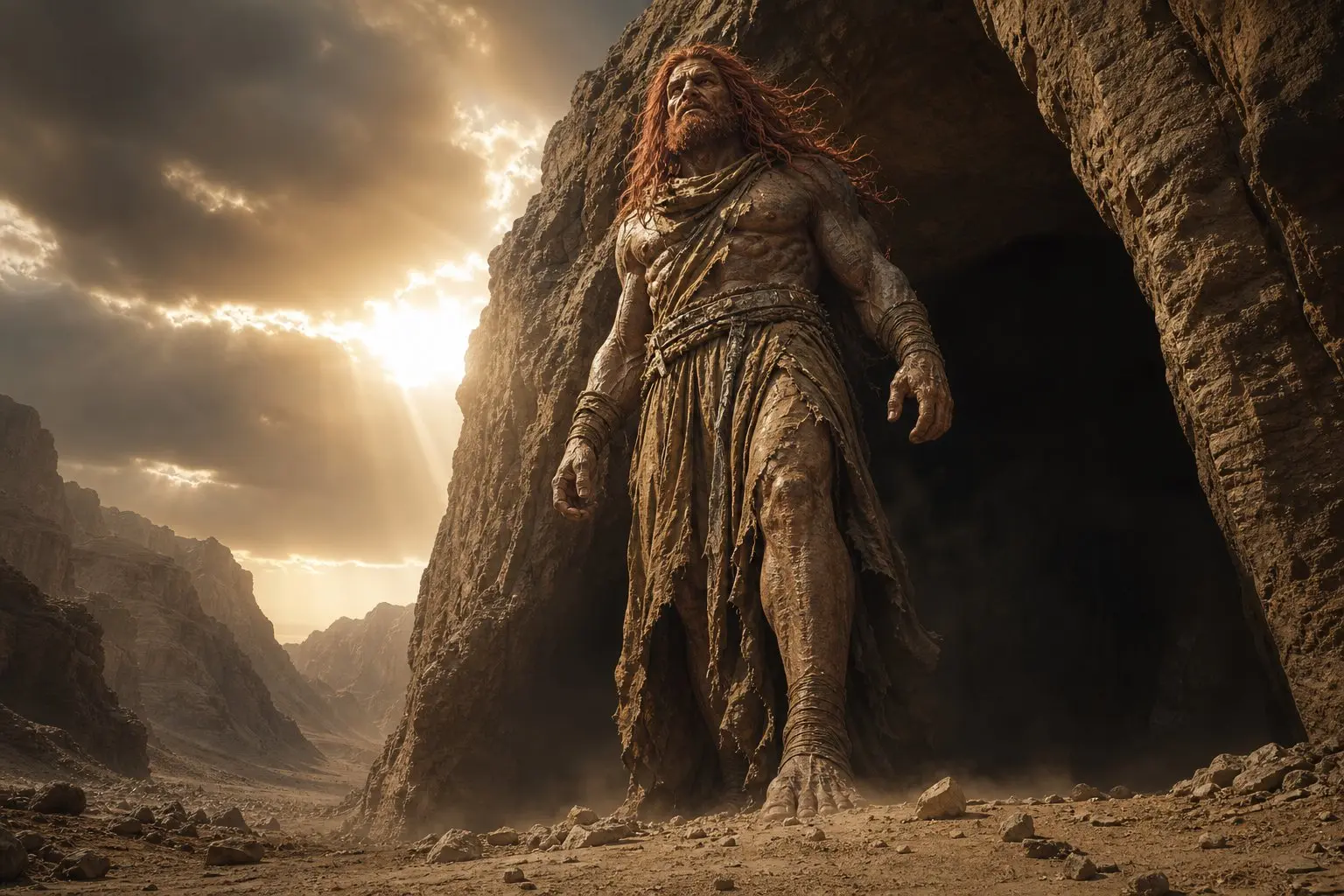
Few questions in biblical research carry more weight — or more speculation — than this one: did the Nephilim bloodline survive, and does it persist among us today? Genesis 6:4 doesn't close the door as firmly as most readers assume: "The Nephilim were on the earth in those days — and also afterward."
That phrase has real textual weight, and it's worth taking seriously. What follows is what scripture actually documents about giant clans after the Flood — and, separately, an honest look at the modern stories often cited alongside it, several of which don't hold up under scrutiny the way the biblical material does.
What Scripture Actually Records
The Post-Flood Giant Clans
Genesis 6:4's "also afterward" is the seed of everything that follows. The text goes on to name specific giant clans encountered by Israel centuries after the Flood:
- The Rephaim — a broad term for giant clans generally, appearing across Genesis, Deuteronomy, and Joshua
- The Anakim — the clan that terrified the twelve spies: "There we saw the Nephilim (the sons of Anak, who come from the Nephilim), and we seemed like grasshoppers in our own sight" (Numbers 13:33)
- The Emim — described in Deuteronomy 2:10-11 as "a people great and many, and tall as the Anakim," dwelling in what became Moab
- The Zamzummim — Deuteronomy 2:20-21 places this clan in the territory that became Ammon, likewise described as "a people great and many, and tall"
These aren't vague or symbolic references — they're tied to specific, named territories east of the Jordan, generations after the Flood.
Og of Bashan and Goliath: The Two Measurements
Two figures give scripture's clearest physical data points:
Og, king of Bashan — Deuteronomy 3:11 records his iron bed at nine cubits by four cubits (roughly 13.5 by 6 feet, using an 18-inch cubit).
Goliath of Gath — 1 Samuel 17:4 gives his height as "six cubits and a span," roughly 9 feet 9 inches in most English translations. It's worth being precise here: the Dead Sea Scrolls (4QSamᵃ), the Septuagint's Codex Vaticanus and Lucianic tradition, and Josephus's Antiquities all instead give "four cubits and a span" — roughly 6 feet 6 inches. Most textual scholars regard this shorter reading as the more original one, with the taller figure appearing to be a later scribal expansion in the Masoretic tradition. Even at the more conservative height, Goliath would still have been a startling outlier in any era — average male height in the Iron Age Levant, based on skeletal remains, is estimated around 5'3" to 5'5".
The Six-Fingered Descendant of Rapha
The clearest single data point for a specific, identifiable physical trait comes from 2 Samuel 21:15-22, describing four giants of the "descendants of the giant [Rapha] in Gath" killed during David's later wars. One of them is described in unusual physical detail:
"And there was again war at Gath, where there was a man of great stature, who had six fingers on each hand, and six toes on each foot, twenty-four in number, and he also was descended from the giants" (2 Samuel 21:20, repeated in 1 Chronicles 20:6)
This is a real, specific, textually documented condition — polydactyly — attributed to a named lineage two generations after Goliath, well after the initial conquest of Canaan.
What Polydactyly Actually Is
Six fingers or toes is a real, medically documented condition called polydactyly, and post-axial polydactyly (an extra digit on the pinky/little-toe side, matching the biblical description) is a recognized, sometimes hereditary trait — often linked to mutations in genes such as GLI3, and it can run in families as an autosomal dominant trait.
It's worth being precise about what this does and doesn't establish. Polydactyly running in a family lineage is real and medically documented. But polydactyly also occurs independently, as a new spontaneous mutation, in unrelated individuals and families constantly — it's a common enough condition worldwide that its appearance in separate, disconnected populations is expected on its own and isn't, by itself, evidence of a single traceable ancestral line connecting them. The Bible documents one specific family line carrying this trait in the 10th century BC. It doesn't provide a mechanism for tracking that same lineage forward another three thousand years, and neither does modern genetics claim to be able to trace a specific unbroken family line across that span from physical trait alone.
Modern Folklore Claims: What the Evidence Actually Supports
Two modern stories are frequently cited alongside this biblical material as if they provide physical confirmation. Both deserve a closer, more skeptical look than they usually get.
Lovelock Cave, Nevada
Northern Paiute oral tradition describes a conflict with a rival group called the Si-Te-Cah, recorded in writing by Paiute writer Sarah Winnemucca Hopkins in her 1883 memoir Life Among the Paiutes. Her actual account describes an enemy tribe with reddish hair — she mentions owning a mourning dress trimmed with hair from the defeated group. Her original writing does not describe them as giants and gives no height at all; that detail was added by later retellings.
In 1911, miners extracting bat guano from Lovelock Cave for fertilizer uncovered a large quantity of ancient artifacts and human remains. This is the critical detail often left out of retellings: this was an unsupervised commercial mining operation, not an archaeological excavation. The miners stripped roughly 250 tons of guano with picks and shovels, kept items they found interesting, and discarded the rest. No trained archaeologist ever saw the site intact. Reports circulated afterward of unusually large, red-haired remains, but no such specimens survive today for independent verification. Historian Adrienne Mayor, who has studied fossil-inspired giant folklore extensively, notes that hair pigment is chemically unstable after death and that burial conditions can shift dark hair toward a reddish hue over time — a documented, non-supernatural explanation the popular retellings rarely mention.
The honest summary: this is a genuine and interesting piece of Paiute oral history, but the physical "giant remains" evidence commonly cited alongside it doesn't exist in any verifiable form today, and the specific "six-fingered" detail attached to it in popular retellings does not trace back to Winnemucca's own account or to any documented archaeological record.
The Kandahar Account
A story describing an encounter with an unusually large, red-haired figure by a U.S. military patrol in Afghanistan circulates widely in this space, most prominently through a documentary by researcher L.A. Marzulli. Every layer of sourcing behind this account is secondhand: an unnamed pilot, secondhand military testimony, and a claimed Pentagon denial that has no findable public record. No photograph, official report, or independently verifiable detail supports this account. It should be treated as unverified testimony, not evidence.
Where This Leaves the Question
Scripture is genuinely clear and well-documented on one point: giant clans, including at least one family line carrying a specific hereditary trait, persisted for centuries after the Flood, right through the era of the united monarchy. That's not speculation — it's textual record, consistently attested across Genesis, Numbers, Deuteronomy, Joshua, and Samuel.
Whether that lineage persisted beyond the biblical record into the modern era is a different question, and it's one the popular "evidence" doesn't actually answer. The honest position is that scripture documents the trait's presence in the ancient world clearly; nothing in the modern folklore claims commonly paired with it holds up as physical confirmation that the same specific lineage continues today.
Frequently Asked Questions
Does the Bible say the Nephilim survived the Flood? Genesis 6:4 states the Nephilim were on the earth "in those days, and also afterward," and later giant clans (the Anakim, Emim, Zamzummim, and the Rapha lineage) are documented well after the Flood. How that continuity happened is debated among scholars — see our coverage of the different explanatory theories.
Is the six-fingered giant in 2 Samuel 21 the only one mentioned in the Bible? He's the only one described with that specific physical detail, though he's identified as one of four giants "descended from the giant [Rapha] in Gath" killed during David's later wars.
Is there real physical evidence of giant remains with extra fingers? Not verifiable evidence connecting ancient biblical giants to any modern discovery. The Lovelock Cave "giant remains" reportedly found in 1911 no longer exist for examination, and the Kandahar account has no independent verification at all.
What is polydactyly and can it run in families? Polydactyly is a real, documented condition involving extra fingers or toes, and post-axial polydactyly can be inherited as an autosomal dominant trait linked to genes such as GLI3. It also occurs independently and spontaneously in unrelated individuals, so its presence alone doesn't establish a traceable single lineage across long time spans.
Primary Source Reference List
- Genesis 6:4 — the Nephilim "in those days, and also afterward"
- Numbers 13:33 — the Anakim identified as descended from the Nephilim
- Deuteronomy 2:10-11, 2:20-21 — the Emim and Zamzummim
- Deuteronomy 3:11 — Og of Bashan's iron bed
- 1 Samuel 17:4 — Goliath's height (with the Masoretic/Dead Sea Scrolls textual variant)
- 2 Samuel 21:15-22; 1 Chronicles 20:4-8 — the four giants of Gath, including the six-fingered, six-toed descendant of Rapha
- Sarah Winnemucca Hopkins, Life Among the Paiutes: Their Wrongs and Claims (1883) — the original Si-Te-Cah account
Categories:
Related Articles
Nephilim Daughters: What Genesis and the Book of Enoch Actually Say
Did the Watchers have daughters? Here's what Genesis, the Book of Enoch, and biblical scholarship actually say about female Nephilim — and where popular theories go beyond the text.

Nephilim and Giants Across Ancient Texts: A Side-by-Side Comparison
Genesis gives the Nephilim four verses. Here's what 1 Enoch, the Book of Giants, Numbers, and Josephus actually say — laid side by side, without blending the accounts.
Why the Covenant Runs Through Isaac: Genesis 17, the Jeconiah Curse, and the Narrowing Line to Jesus
Genesis 17 names Isaac, not Ishmael, as the covenant line — and it's the first of several narrowing points scripture traces all the way to Jesus. Here's the full pattern, with genealogy tables.

Why Did Human Lifespans Decline After the Flood? What Scripture Doesn't Say — And What Scholars Have Proposed
Genesis 5 records lifespans over 900 years. By Psalm 90, it's 70-80. Scripture never explains why. Here's what rabbinic, patristic, and modern scholarship have proposed instead.