Psalm 23 Meaning: A Verse-by-Verse Commentary on 'The LORD Is My Shepherd'
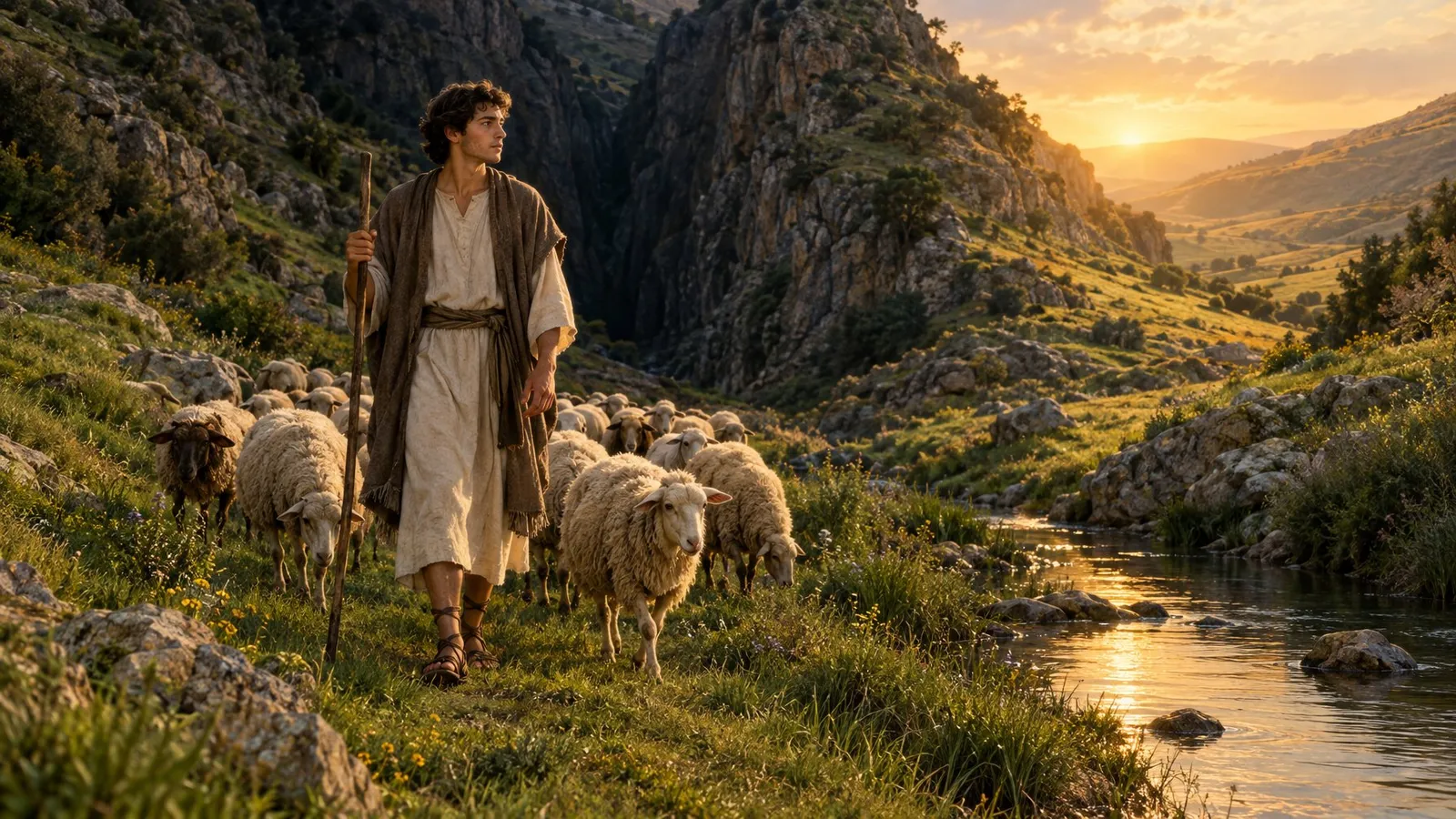
"The LORD is my shepherd; I shall not want." (Psalm 23:1)
Psalm 23 is read at more funerals than perhaps any other passage of Scripture. It is memorized by children, whispered at hospital bedsides and carved on gravestones. Many people who know almost no other Bible verse know "The LORD is my shepherd."
The 23rd Psalm is only six verses long, but every line carries a picture from the life of an ancient shepherd. This commentary on Psalm 23 walks through it verse by verse, with the Hebrew behind the words.
What Does Psalm 23 Mean?
Psalm 23 means that the LORD personally cares for his people the way a good shepherd cares for his sheep: providing for them, leading them, protecting them through danger, and finally welcoming them as honored guests into his house forever.
The psalm has two pictures. In verses 1–4, God is the shepherd and we are the sheep. In verses 5–6, God is the host and we are his guests.
Who Wrote Psalm 23?
The psalm's heading is "A Psalm of David." David knew sheep. He was the youngest son of Jesse and was out "keeping the sheep" when Samuel came to anoint him (1 Samuel 16:11). He told King Saul that he had fought off a lion and a bear to rescue a lamb (1 Samuel 17:34–35). When David wrote "The LORD is my shepherd," he was describing God as the kind of shepherd he himself had tried to be.
Psalm 23 Verse by Verse: God Is Our Shepherd
Verse 1: "The LORD Is My Shepherd; I Shall Not Want"
In Hebrew, the psalm opens with just two words: YHWH ro'i, "the LORD, my shepherd." The word for shepherd, ro'eh, means one who feeds and tends a flock.
In the ancient Near East, kings were often called shepherds of their people. But David, a king himself, says the LORD is his shepherd. The title is sometimes used as a name of God, Jehovah Rohi or YHWH Ro'i, "the LORD my shepherd," alongside names like Jehovah Jireh (see our study of what Jehovah Jireh means).
"I shall not want" means "I will lack nothing I truly need." Moses said the same of Israel's forty years in the wilderness: "You have lacked nothing" (Deuteronomy 2:7).
Verse 2: Green Pastures and Still Waters
"He makes me lie down in green pastures. He leads me beside still waters." (Psalm 23:2)
In the dry hills of Judea, green grass was not everywhere. A shepherd had to know where to find good pasture and lead the flock there. Sheep also will not lie down unless they feel safe and full.
"Still waters" is in Hebrew mei menuchot, literally "waters of rest." Sheep are frightened by rushing streams. A good shepherd leads them to calm water where they can drink in peace. The NIV translates it "quiet waters."
Verse 3: "He Restores My Soul"
"He restores my soul. He leads me in paths of righteousness for his name's sake." (Psalm 23:3)
"Restores" comes from the Hebrew shuv, "to turn back" or "bring back." The picture is of a shepherd bringing back a sheep that has wandered, or reviving one that is weak.
"Paths of righteousness," ma'gelei tsedeq, can mean "right paths," the tracks worn into the hillside that lead safely where the flock needs to go. The shepherd leads that way "for his name's sake," because his reputation as a good shepherd is at stake. For another verse about God leading us on straight paths, see our study of Proverbs 3:5-6.
Verse 4: The Valley of the Shadow of Death
"Even though I walk through the valley of the shadow of death, I will fear no evil, for you are with me; your rod and your staff, they comfort me." (Psalm 23:4)
The Hebrew word tsalmavet is traditionally translated "shadow of death." Many scholars read it as "deep darkness" or "darkest valley," which is how the NIV renders it. It is the dark valley every life passes through. It describes the narrow, shadowed ravines of the Judean wilderness, where wild animals and robbers could hide.
Notice three things:
- "Through" the valley. The sheep do not stay there. They pass through.
- The pronoun changes. In verses 1–3, David speaks about God: "he makes me," "he leads me." In verse 4, he speaks to God: "you are with me." In the darkest place, the psalm turns to prayer.
- The rod and the staff. The rod (shevet) was a short, heavy club used to fight off predators. The staff (mish'enet) was a long walking stick used to guide and support. Mish'enet comes from the same root as the word "lean" in Proverbs 3:5. The rod protects; the staff is something to lean on.
Verse 5: A Table in the Presence of My Enemies
"You prepare a table before me in the presence of my enemies; you anoint my head with oil; my cup overflows." (Psalm 23:5)
Here the picture changes from shepherd to host. In the ancient world, a host who welcomed a guest to his table was bound to protect him. David's enemies are still there, but they can only watch while God serves him a meal.
Anointing the head with oil was a sign of honor and refreshment for a guest (Luke 7:46). An overflowing cup is generosity beyond what was needed.
Verse 6: Goodness and Mercy Shall Follow Me
"Surely goodness and mercy shall follow me all the days of my life, and I shall dwell in the house of the LORD forever." (Psalm 23:6)
The NIV puts it, "Surely your goodness and love will follow me all the days of my life." "Follow" is the Hebrew radaph, a strong word that usually means "pursue" or "chase." Enemies usually pursue in the psalms. Here, God's goodness (tov) and mercy (chesed, steadfast covenant love) run after David instead.
"I shall dwell" follows the ancient Greek Septuagint. The Hebrew consonants can also be read "I shall return to the house of the LORD." Either way, the psalm ends at home with God, "forever," or more literally "for length of days."
Psalm 23 in the KJV
Many people know Psalm 23 best in the King James Version:
"The LORD is my shepherd; I shall not want. He maketh me to lie down in green pastures: he leadeth me beside the still waters. He restoreth my soul: he leadeth me in the paths of righteousness for his name's sake. Yea, though I walk through the valley of the shadow of death, I will fear no evil: for thou art with me; thy rod and thy staff they comfort me. Thou preparest a table before me in the presence of mine enemies: thou anointest my head with oil; my cup runneth over. Surely goodness and mercy shall follow me all the days of my life: and I will dwell in the house of the LORD for ever." (Psalm 23:1–6, KJV)
Jesus, the Good Shepherd
Psalm 23 points forward. Through the prophet Ezekiel, God promised, "I myself will be the shepherd of my sheep, and I myself will make them lie down" (Ezekiel 34:15). Jesus claimed that role:
"I am the good shepherd. The good shepherd lays down his life for the sheep." (John 10:11)
David's shepherd fought off lions for the sheep. Jesus went further and died for them. He is the shepherd who will leave the 99 to find the one sheep that is lost (Luke 15:4–7), our Lord and Savior. The New Testament calls him "the great shepherd of the sheep" (Hebrews 13:20) and "the Shepherd and Overseer of your souls" (1 Peter 2:25). And in Revelation, "the Lamb in the midst of the throne will be their shepherd, and he will guide them to springs of living water" (Revelation 7:17), the final "still waters."
Why Psalm 23 Is Read at Funerals
Psalm 23 speaks directly to grief. It names "the valley of the shadow of death" without pretending it is not there. It promises God's presence in that valley, not a way around it. And it ends with a home: "the house of the LORD forever." For believers, that final verse is a picture of the hope of eternal life.
How to Pray Psalm 23 Today
- Make it personal. Notice how often David says "my" and "me." Pray it in the first person.
- Let him lead you to rest. Green pastures and still waters are God's idea. Rest is not laziness; it is trust.
- Speak to him in the valley. When you walk through darkness, do what David did in verse 4: stop talking about God and talk to him.
- Lean on the staff. Bring your weakness to God and let him support you. Jesus promised that the Holy Spirit would be our Helper (John 14:16), and the Holy Spirit is how the Shepherd stays with his sheep today.
- Look behind you. Goodness and mercy are following you. Look back over your life and name where they have been.
For another invitation to rest, see our study of Matthew 11:28. If you read Spanish, see our study of Salmos 23.
Frequently Asked Questions About Psalm 23
That the LORD cares for his people like a good shepherd: providing for them, leading them, protecting them through danger, and welcoming them into his house forever.
Its heading says 'A Psalm of David.' David was a shepherd in his youth (1 Samuel 16:11; 17:34–35) and wrote about God from that experience.
The Hebrew tsalmavet means deep darkness or the shadow of death. It pictures the dark ravines where sheep faced danger, and it describes the darkest seasons of life, including death itself. The psalm promises God's presence there: 'for you are with me.'
The rod was a short club a shepherd used to defend the flock. The staff was a long stick used to guide and support the sheep. Together they picture God's protection and guidance.
It begins, 'The LORD is my shepherd; I shall not want. He maketh me to lie down in green pastures: he leadeth me beside the still waters.'
Jesus called himself 'the good shepherd' who 'lays down his life for the sheep' (John 10:11). The New Testament calls him the great shepherd of the sheep (Hebrews 13:20).
Scripture quotations are from the English Standard Version (ESV) unless otherwise noted.
Categories:
Related Articles

Biblically Accurate Angels: What Angels Look Like in the Bible
Wheels full of eyes, six-winged seraphim, four-faced cherubim, or ordinary-looking men? See what the Bible actually says angels look like, verse by verse, with the Hebrew behind each name.
Hallelujah Meaning: What Does Hallelujah Mean in the Bible?
Hallelujah means 'Praise Yah,' a Hebrew command to praise the LORD. See where it appears in the Psalms and Revelation, how it differs from Alleluia, and why the Bible kept it untranslated.

Isaiah 40:31 Meaning: 'They Shall Mount Up With Wings Like Eagles'
Isaiah 40:31 promises that those who wait for the LORD will renew their strength and mount up with wings like eagles. Here is what 'wait' means in Hebrew, who first heard it, and why walking comes last.
Isaiah 41:10 Meaning: 'Fear Not, for I Am With You'
Isaiah 41:10 gives two reasons not to fear and three promises: God will strengthen, help and uphold you. Here is what it meant to Israel, what 'dismayed' and 'righteous right hand' mean in Hebrew, and how to hold on to it.