
Is the Trinity in the Old Testament? The Passages, Ranked From Strongest to Weakest
"The Trinity isn't in the Old Testament. Christians invented it later."
If you've heard that, it's worth testing. This article doesn't ask you to trust any teacher, including us. Every argument below rests on verses you can open in your own Bible right now. Where a passage is strong, we'll say so. Where it's weak, or where Jewish readers understand it differently, we'll say that too.
Two things to settle first. The word "Trinity" isn't in the Bible, Old Testament or New. And the Old Testament never states the doctrine in a sentence. The real question is whether the Hebrew Scriptures show plurality within the one God: one LORD who is also somehow more than one person.
The starting point is the confession every Jewish child learns:
"Hear, O Israel: The LORD our God is one LORD." (Deuteronomy 6:4)
Nothing below contradicts that. The question is what kind of "one" the rest of the Old Testament describes.
1. Two LORDs in One Verse (Strong)
Start with the destruction of Sodom:
"Then the LORD rained upon Sodom and upon Gomorrah brimstone and fire from the LORD out of heaven." (Genesis 19:24)
Read it slowly. The LORD (Yahweh) rains fire from the LORD (Yahweh) out of heaven. One is on the earth, where Yahweh had just been talking with Abraham in human form (Genesis 18). The other is in heaven.
The other side. Hebrew sometimes repeats a name where English would use "himself." Lamech says to his wives, "ye wives of Lamech, hearken unto my speech" (Genesis 4:23), meaning his own wives. On that reading, "from the LORD" just means "from himself."
Why it still matters. Ancient Jewish interpreters noticed the oddity too. In Genesis Rabbah 51, a rabbinic commentary on Genesis, the rabbis offered several explanations for the double "LORD," including that the first one referred to the angel Gabriel. They wouldn't have needed explanations if the verse didn't raise the question.
2. The Angel Who Is the LORD (Strong)
The strongest Old Testament evidence is a figure called "the angel of the LORD." The Hebrew word for angel, malak, simply means messenger. But this messenger keeps doing what only God does, and the people who meet him keep calling him God.
Follow him through Scripture:
- Hagar (Genesis 16). The angel of the LORD promises, "I will multiply thy seed exceedingly" (16:10), a promise only God can make. Then Hagar "called the name of the LORD that spake unto her, Thou God seest me" (16:13).
- Abraham on Mount Moriah (Genesis 22). The angel of the LORD calls from heaven: "thou hast not withheld thy son, thine only son from me" (22:12). Abraham was offering Isaac to God, not to an angel. Then: "By myself have I sworn, saith the LORD" (22:16).
- Jacob (Genesis 31). "The angel of God spake unto me in a dream" (31:11), and that angel says, "I am the God of Bethel... where thou vowedst a vow unto me" (31:13).
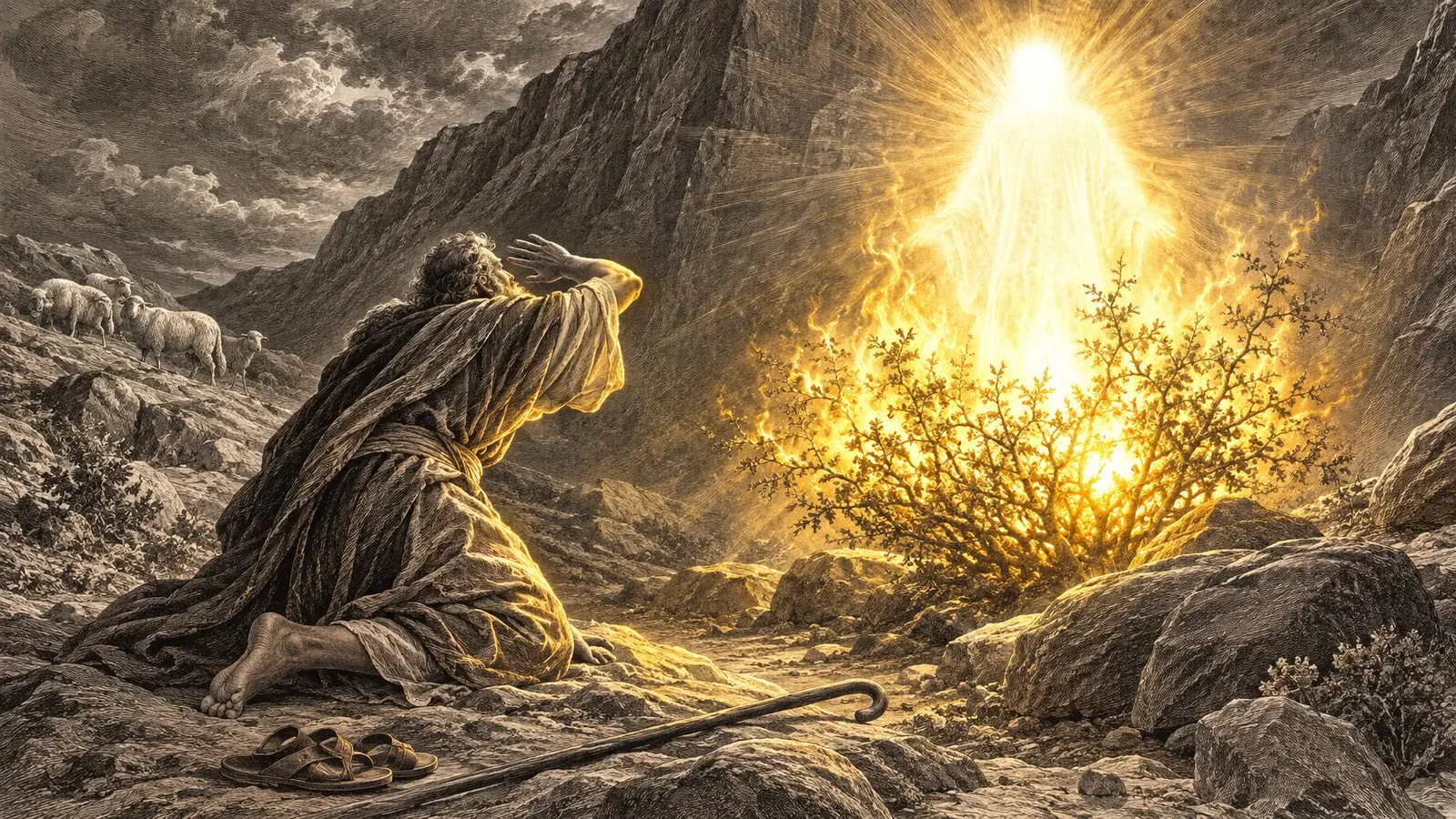
- The burning bush (Exodus 3). "The angel of the LORD appeared unto him in a flame of fire out of the midst of a bush" (3:2). Two verses later, "God called unto him out of the midst of the bush," and says, "I am the God of thy father, the God of Abraham" (3:4, 6). Moses "hid his face; for he was afraid to look upon God."
- Samson's parents (Judges 13). When the angel of the LORD rises in the altar flame, Manoah says, "We shall surely die, because we have seen God" (13:22).
Now notice that this figure is also distinct from God:
"Behold, I send an Angel before thee... Beware of him, and obey his voice, provoke him not; for he will not pardon your transgressions: for my name is in him." (Exodus 23:20-21)
An angel who can refuse to pardon sin, and who carries God's own name. Later he speaks as the God of the Exodus himself: "I made you to go up out of Egypt... I will never break my covenant with you" (Judges 2:1).
Two more scenes complete the picture. Jacob wrestles a "man" all night and says afterward, "I have seen God face to face" (Genesis 32:30). The prophet Hosea, retelling that story, calls the same being both God and an angel: "he had power with God: Yea, he had power over the angel... Even the LORD God of hosts" (Hosea 12:3-5). And when Joshua meets "the captain of the host of the LORD," he "fell on his face to the earth, and did worship," and is told, "Loose thy shoe from off thy foot; for the place whereon thou standest is holy" (Joshua 5:14-15), the same words spoken at the burning bush.
Finally, as Jacob blesses Joseph's sons, he names God and the angel as one source of blessing:
"God, before whom my fathers Abraham and Isaac did walk, the God which fed me all my life long unto this day, the Angel which redeemed me from all evil, bless the lads." (Genesis 48:15-16)
In Hebrew, "bless" here is singular. God and the Angel act as one.
The other side. In the ancient world a messenger often spoke in the first person for the one who sent him, the way an ambassador speaks for a king. On that view the angel says "I am the God of Bethel" the way a herald reads the king's words.
Why that doesn't fully work. An ambassador doesn't accept worship (Joshua 5:14), doesn't make a holy ground of his own presence, doesn't swear "by myself," and doesn't leave people terrified because they've "seen God." Elsewhere, ordinary angels refuse worship outright (Revelation 22:8-9). (For what the Bible says ordinary angels look like and do, see Biblically Accurate Angels.) The angel of the LORD never does.
3. The LORD Sent by the LORD (Strong)
Some prophets go further and have the LORD say he was sent by the LORD:
"Sing and rejoice, O daughter of Zion: for, lo, I come, and I will dwell in the midst of thee, saith the LORD. And many nations shall be joined to the LORD in that day... and thou shalt know that the LORD of hosts hath sent me unto thee." (Zechariah 2:10-11)
The speaker is the LORD, who will come and dwell with his people. And the LORD of hosts has sent him.
The other side. Many Jewish readers take "hath sent me" as the prophet Zechariah stepping in to speak for himself. That's possible, since prophets do switch voices. But the "me" who is sent is the same "I" who says "I will dwell in the midst of thee," and that's a promise only God makes.
Hosea has a similar line: "I will have mercy upon the house of Judah, and will save them by the LORD their God" (Hosea 1:7). The LORD saves by the LORD.
And Isaiah has the clearest example, where the speaker who calls himself "the first and the last" says, "now the Lord GOD, and his Spirit, hath sent me" (Isaiah 48:12, 16). We look at that passage, and how Jewish readers take it, in Who Is the Alpha and Omega?
4. God Has a Son (Suggestive to Strong)
Psalm 2
Psalm 2 describes a world in revolt, with "the rulers... against the LORD, and against his anointed" (2:2). Then the LORD speaks to that anointed one:
"I will declare the decree: the LORD hath said unto me, Thou art my Son; this day have I begotten thee." (Psalm 2:7)
And the psalm ends with a warning to the kings of the earth:
"Serve the LORD with fear, and rejoice with trembling. Kiss the Son, lest he be angry, and ye perish from the way... Blessed are all they that put their trust in him." (Psalm 2:11-12)
Serve the LORD; kiss the Son. And blessing is promised to those who put their trust in him. The apostles quoted this psalm and named the anointed one: "against thy holy child Jesus, whom thou hast anointed" (Acts 4:27).
The other side. Psalm 2 was first a coronation psalm for Israel's king, echoing God's promise about David's heir: "I will be his father, and he shall be my son" (2 Samuel 7:14). And in verse 12 the word for "son" is bar, the Aramaic word rather than the usual Hebrew ben, so some translations read "kiss sincerely" or "do homage purely" instead. That's why we rate it as suggestive, and strong when read alongside the passages that follow.
Psalm 45 and Psalm 110
Psalm 45 addresses the king in surprising terms: "Thy throne, O God, is for ever and ever... therefore God, thy God, hath anointed thee" (Psalm 45:6-7). The one addressed as God is anointed by his God. Hebrews 1:8 applies this to the Son.
Psalm 110 opens, "The LORD said unto my Lord, Sit thou at my right hand." Jesus used it to stump the Pharisees: if the Messiah is David's son, "how then doth David in spirit call him Lord?" (Matthew 22:43-45). "And no man was able to answer him a word."
Proverbs 30:4
Agur asks who has gone up to heaven and gathered the wind in his fists, then adds: "what is his name, and what is his son's name, if thou canst tell?" (Proverbs 30:4). It's a question, not a doctrine, but it's a striking question for a Hebrew wise man to ask about the Creator.
5. The Rider on the Clouds (Strong)
Throughout the Old Testament, riding on the clouds is something only God does:
- "who maketh the clouds his chariot" (Psalm 104:3)
- "the LORD rideth upon a swift cloud" (Isaiah 19:1)
- "the God of Jeshurun, who rideth upon the heaven" (Deuteronomy 33:26)
- "extol him that rideth upon the heavens" (Psalm 68:4)
Then Daniel sees God, "the Ancient of days," on his throne, and a second figure arrives:
"Behold, one like the Son of man came with the clouds of heaven, and came to the Ancient of days... And there was given him dominion, and glory, and a kingdom, that all people, nations, and languages, should serve him." (Daniel 7:13-14)
A second figure who comes on the clouds, as only God does, and receives the worship of every nation.
At his trial the high priest demanded Jesus say whether he was "the Christ, the Son of God." Jesus answered with this exact passage: "Hereafter shall ye see the Son of man sitting on the right hand of power, and coming in the clouds of heaven." The high priest tore his clothes and said, "He hath spoken blasphemy" (Matthew 26:63-65). He understood the claim.
The other side. Later in the chapter, the kingdom is given "to the people of the saints of the most High" (Daniel 7:27), so some read the "son of man" as a symbol for faithful Israel. But a symbol for the saints doesn't explain why the figure rides the clouds like God, and Jesus's hearers clearly didn't take his claim as a statement about Israel.
6. Father, Son and Spirit in One Vision (Strong)
The Spirit of God is present from the second verse of the Bible: "And the Spirit of God moved upon the face of the waters" (Genesis 1:2). But the most remarkable passage is Isaiah 6.
Isaiah sees "the LORD sitting upon a throne, high and lifted up," hears the seraphim cry "Holy, holy, holy, is the LORD of hosts," and then hears the voice say, "Whom shall I send, and who will go for us?" (Isaiah 6:1-8). He is told to preach to a people who will hear but not understand.
The New Testament quotes this vision twice, and attributes it differently each time:
- To the Son. After quoting Isaiah 6, John says: "These things said Esaias, when he saw his glory, and spake of him" (John 12:41). In context, "him" is Jesus.
- To the Spirit. Paul quotes the same words and introduces them, "Well spake the Holy Ghost by Esaias the prophet unto our fathers" (Acts 28:25).
The one on the throne in Isaiah 6 is identified with the Son by John and with the Spirit by Paul.
Isaiah 63 gathers all three in a single retelling of the Exodus: the LORD "was afflicted" in his people's affliction, "the angel of his presence saved them," and when they rebelled, they "vexed his holy Spirit" (Isaiah 63:9-10).
7. "Let Us Make Man" (Suggestive)
This is the passage people quote first:
"And God said, Let us make man in our image, after our likeness." (Genesis 1:26)
God also says "the man is become as one of us" (Genesis 3:22) and "let us go down" at Babel (Genesis 11:7).
The other side. God is pictured elsewhere with a heavenly court: "I saw the LORD sitting on his throne, and all the host of heaven standing by him" (1 Kings 22:19). "Us" could be God speaking to that court, or a way of deliberating with himself. And the very next verse uses the singular: "God created man in his own image" (Genesis 1:27).
The plural is consistent with plurality in God, and the switch from "our image" to "his own image" is interesting. But on its own it can't carry the case. It's best read alongside the stronger passages above.
8. Arguments That Don't Hold Up
Some popular arguments for the Trinity in the Old Testament are weak, and repeating them hands critics an easy win.
- "Elohim is plural, so God is plural." Elohim does have a plural ending, but the Bible uses the same word for a single false god: "Chemosh the god of the Moabites" (1 Kings 11:33) is elohim in Hebrew. The plural expresses majesty or fullness, not number.
- "Echad means a compound one." In "one flesh" (Genesis 2:24) or "one day" (Genesis 1:5), the sense of togetherness comes from the noun, not from echad, which simply means "one." And the alternative word yachid means "only" or "unique" (Isaac, Abraham's only son), so its absence from Deuteronomy 6:4 proves nothing.
- "Eve said 'I have gotten a man: the LORD.'" In Genesis 4:1 the small Hebrew word et can mark a direct object or mean "with." Most translations take it as "with the help of" or, in the King James, "from the LORD."
- "The Alef-Tav in Zechariah 12:10." Et (spelled alef-tav) is the ordinary Hebrew marker for a direct object. It appears thousands of times and isn't a hidden title.
None of this weakens the stronger passages. It just means the case should rest on them.
Did Ancient Jews Notice?
They did. Rabbinic writings show the sages wrestling with the same passages. Genesis Rabbah 51 discusses the double "LORD" of Genesis 19:24. The Talmud (Hagigah 15a) tells of the second-century rabbi Elisha ben Abuya, who saw a heavenly figure seated in heaven and concluded, "perhaps there are two powers." The rabbis condemned "two powers in heaven" as heresy, but the debate itself shows the texts raised the question long before anyone used the word Trinity. (For more on how Jewish writings of that era pictured the heavenly world, see Who Are the Watchers?)
The Old Testament Evidence at a Glance
| Passage | What it shows | Strength | Main objection |
|---|---|---|---|
| Genesis 19:24 | The LORD rains fire from the LORD | Strong | Hebrew can repeat a name for "himself" |
| Angel of the LORD (Gen 16, 22, 31; Ex 3; Judg 13) | A messenger who is called God and worshipped | Strong | Agents speak for their sender |
| Exodus 23:21 | "My name is in him" | Strong | — |
| Zechariah 2:10-11; Isaiah 48:16 | The LORD sent by the LORD | Strong | The speaker may shift to the prophet |
| Daniel 7:13-14 | A second figure riding the clouds | Strong | The figure may symbolise the saints |
| Isaiah 6 with John 12:41, Acts 28:25 | One vision credited to Son and Spirit | Strong (with the NT) | — |
| Psalm 2; 45; 110 | God's Son, addressed as God | Suggestive to strong | First about Israel's king |
| Genesis 1:26 "Let us" | Plural speech | Suggestive | Heavenly court |
| Elohim, echad, Genesis 4:1, Alef-Tav | — | Weak | See above |
So Is the Trinity in the Old Testament?
Not as a stated doctrine. Nowhere does the Old Testament say "God is three persons." But it does leave a pattern that's hard to miss once you see it: one God who is also seen in the form of his Angel, who sends himself, who has a Son seated at his right hand, and whose Spirit moves, grieves and speaks.
When the New Testament writers named the Father, the Son and the Holy Spirit, they weren't adding a new god to Israel's faith. They were naming what they believed the Hebrew Scriptures had shown all along. You don't have to take anyone's word for it. Open the passages above and read them for yourself.
Bible quotations are from the King James Version.
Categories:
Related Articles
Divination in the Bible: What It Is, Why God Forbids It, and What About Remote Viewing?
What is divination in the Bible? The nine forbidden practices of Deuteronomy 18 in Hebrew, the spirit of divination in Acts 16, and how remote viewing and astral projection compare.
Psalm 2 Meaning: A Verse-by-Verse Guide to the Psalm of God's Son
What does Psalm 2 mean? Read the full KJV text, find out who speaks each stanza, what 'this day have I begotten thee' and 'Kiss the Son' mean, and every New Testament use.

Leviathan and Behemoth in the Bible: The Two Great Beasts God Showed Job
What is Leviathan? What is Behemoth? Read God's own description in Job 40-41, the fire-breathing sea serpent of Isaiah and the Psalms, and what Enoch says about both.
Why Did Noah Build an Altar After the Flood? Genesis 8:20-22 Explained
Noah saved the animals, then sacrificed some of them. Why? Genesis 8:20-22 explained: the first altar in the Bible, the 'sweet savour', and God's surprising reason for mercy.